Trail 5: Walking the Nakasendo Trail – Conquering Usui Toge Pass from Karuizawa to Yokokawa

Day 5 Summary:
8:45 AM: Early departure from Hotel Tsuruya, hike from Karuizawa 軽井沢 to Usui Toge Pass 碓氷峠 (2hr 15min)
11:00 AM: Reach Usui Toge Pass summit and shrine
11:30 AM: Begin descent into Gunma Prefecture
1:00 PM: Packed lunch in the mountain forest
3:30 PM – 5:00 PM: Navigate the steep, rocky final descent to Yokokawa
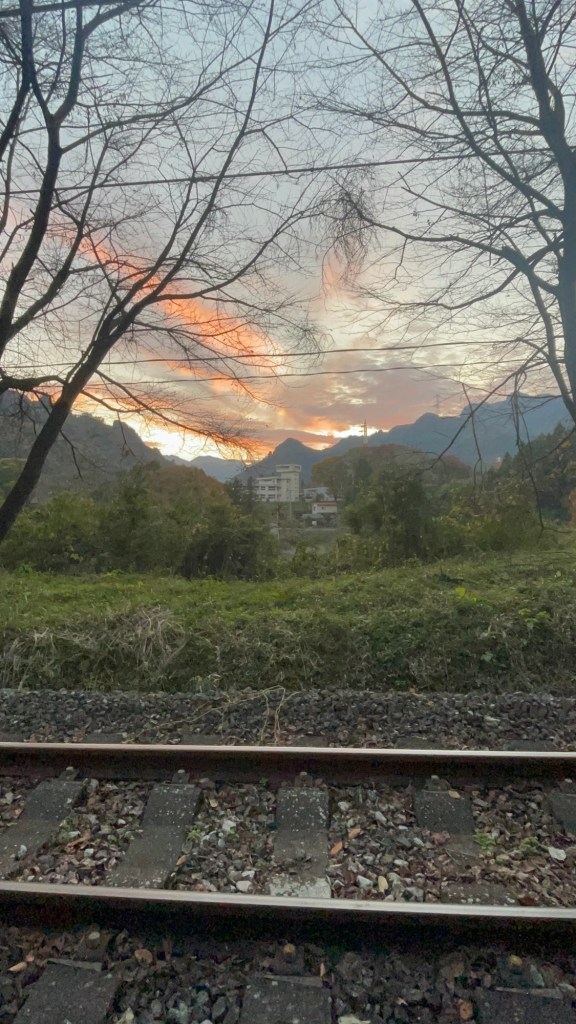
5:21 PM: Train from Yokokawa Station 横川 to Takasaki Station 高崎
5:53 PM: Arrive at Takasaki Station, walk to accommodation
Evening: Settle into Rakuten STAY HOUSE and dinner with camp provisions

Day 5 brought us to what I consider the most challenging and remote section of the entire Nakasendo Trail—the legendary Usui Toge Pass 碓氷峠. This mountain crossing between Nagano and Gunma Prefectures was one of the three most notorious passes on the historic route, so difficult that an Edo-period saying warned: “Kiso no Kakehashi, Ota no Watashi, and Usui Pass are the only ones to be crossed.” After four days of hiking that had gradually built our stamina and confidence, we were as ready as we would ever be to tackle this final mountain challenge.
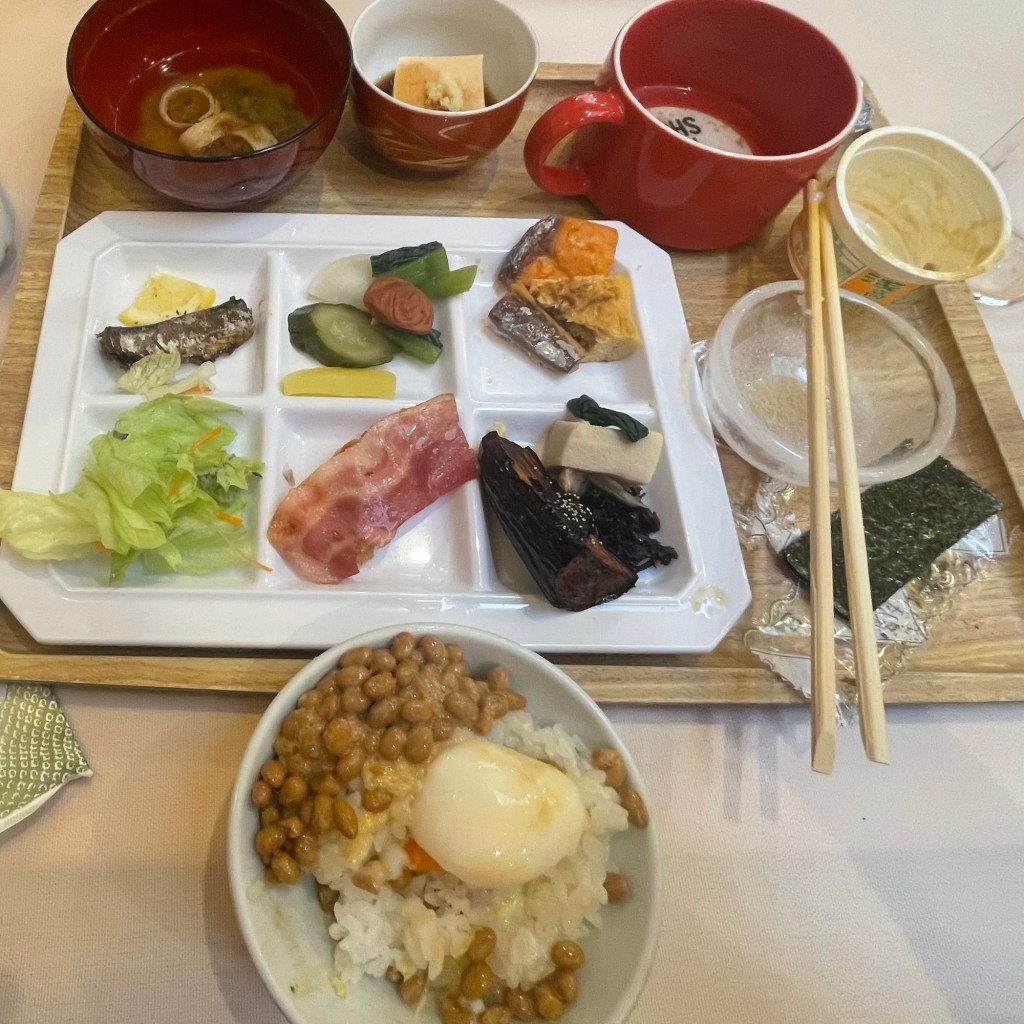
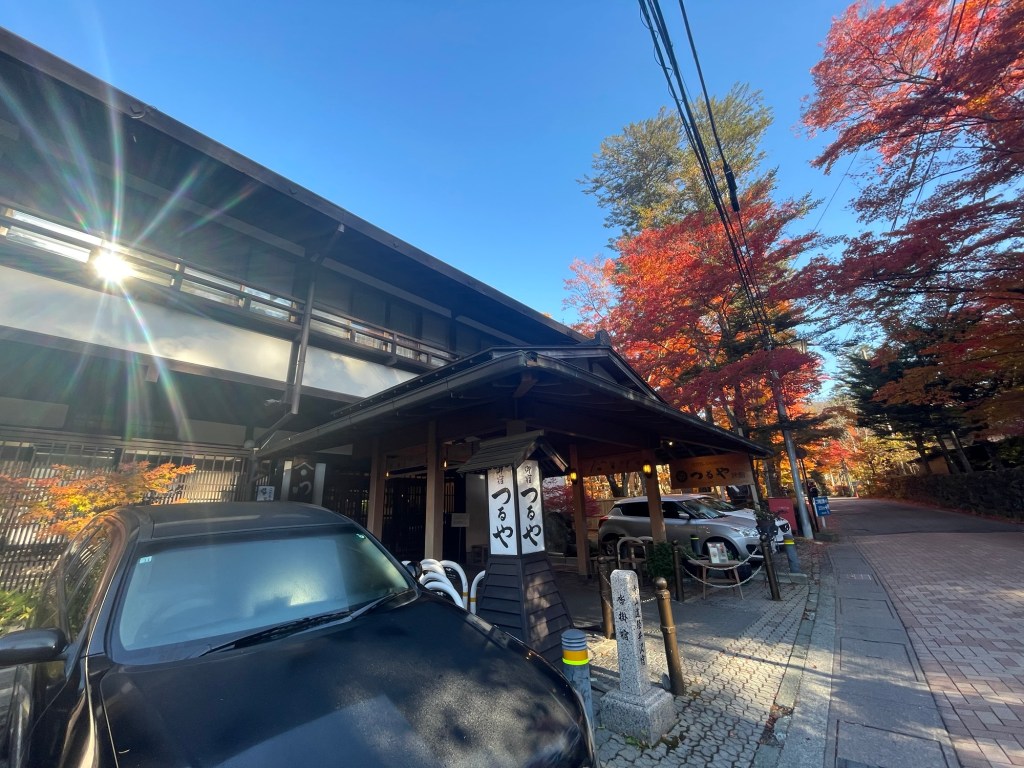
8:45 AM: We began Day 5 with a rushed but hearty Japanese and Western-style buffet breakfast at Hotel Tsuruya. Unlike our previous leisurely mornings, we had no time to linger—Usui Toge demanded an early start. This section was remote, unmarked in places, and would take significantly longer than the distance suggested. Armed with his homemade YouTube video downloaded to our phones, our packed provisions from Old Karuizawa, and four days of accumulated hiking experience, we set off into the cool morning air.

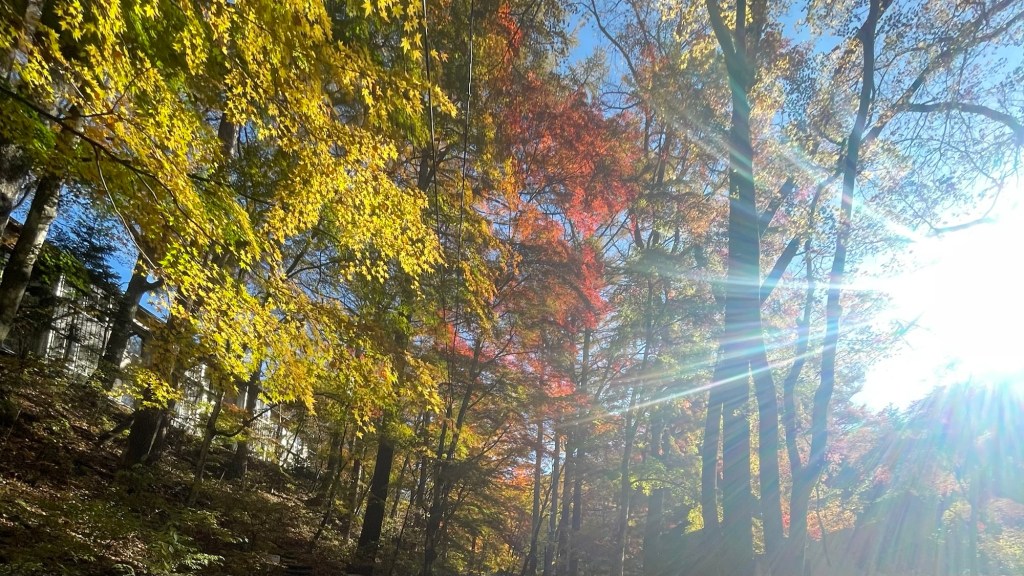
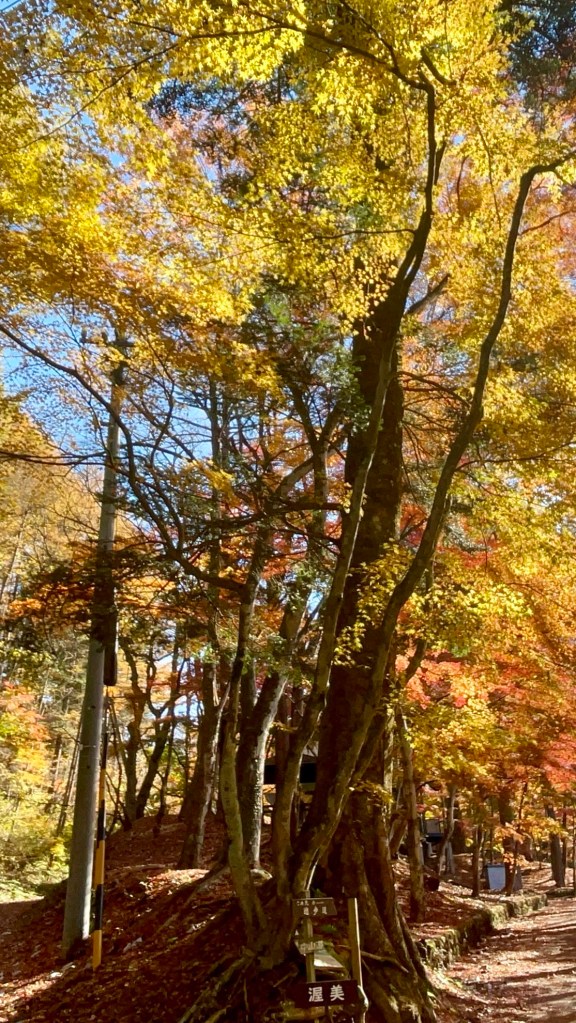
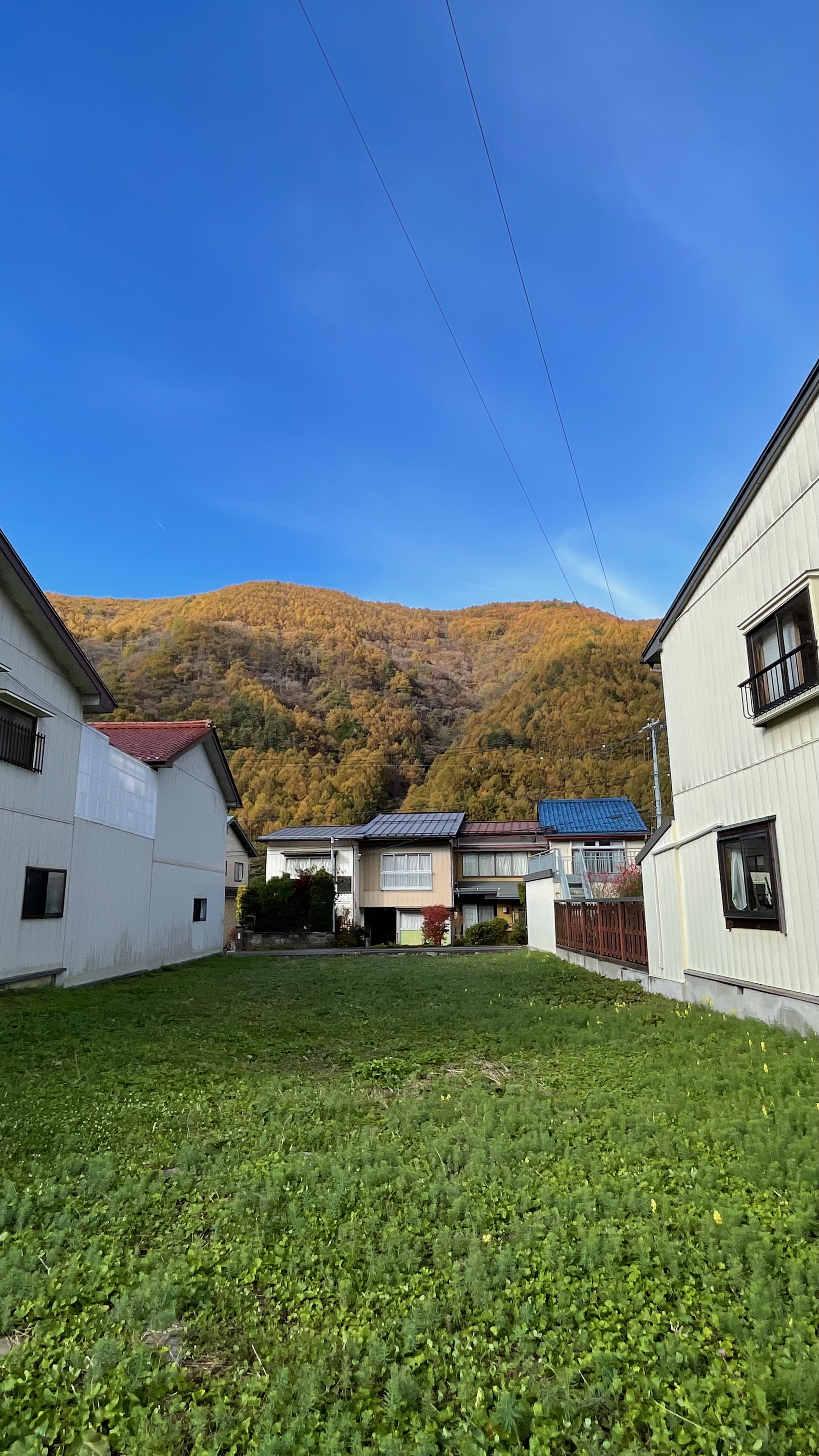
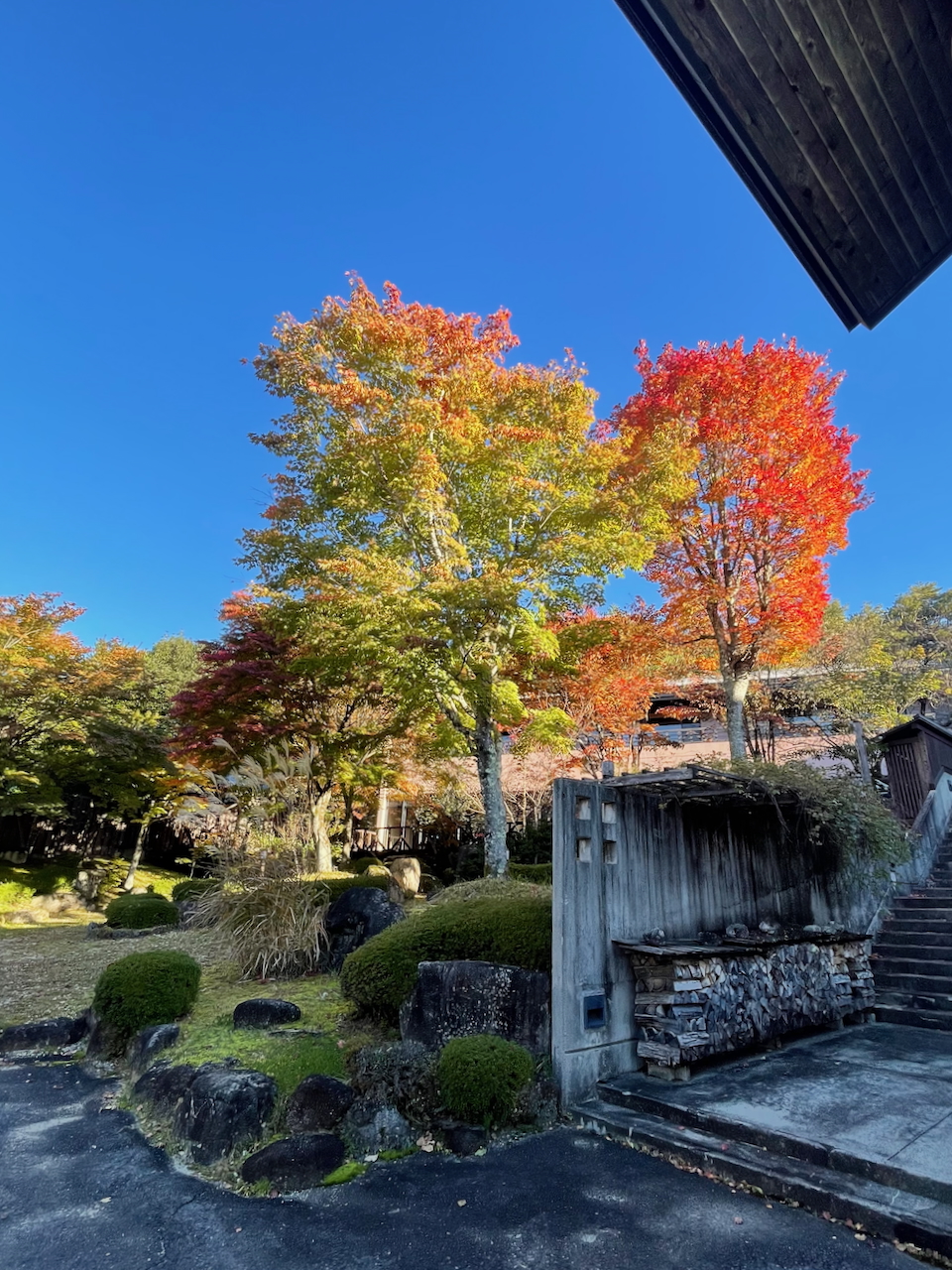
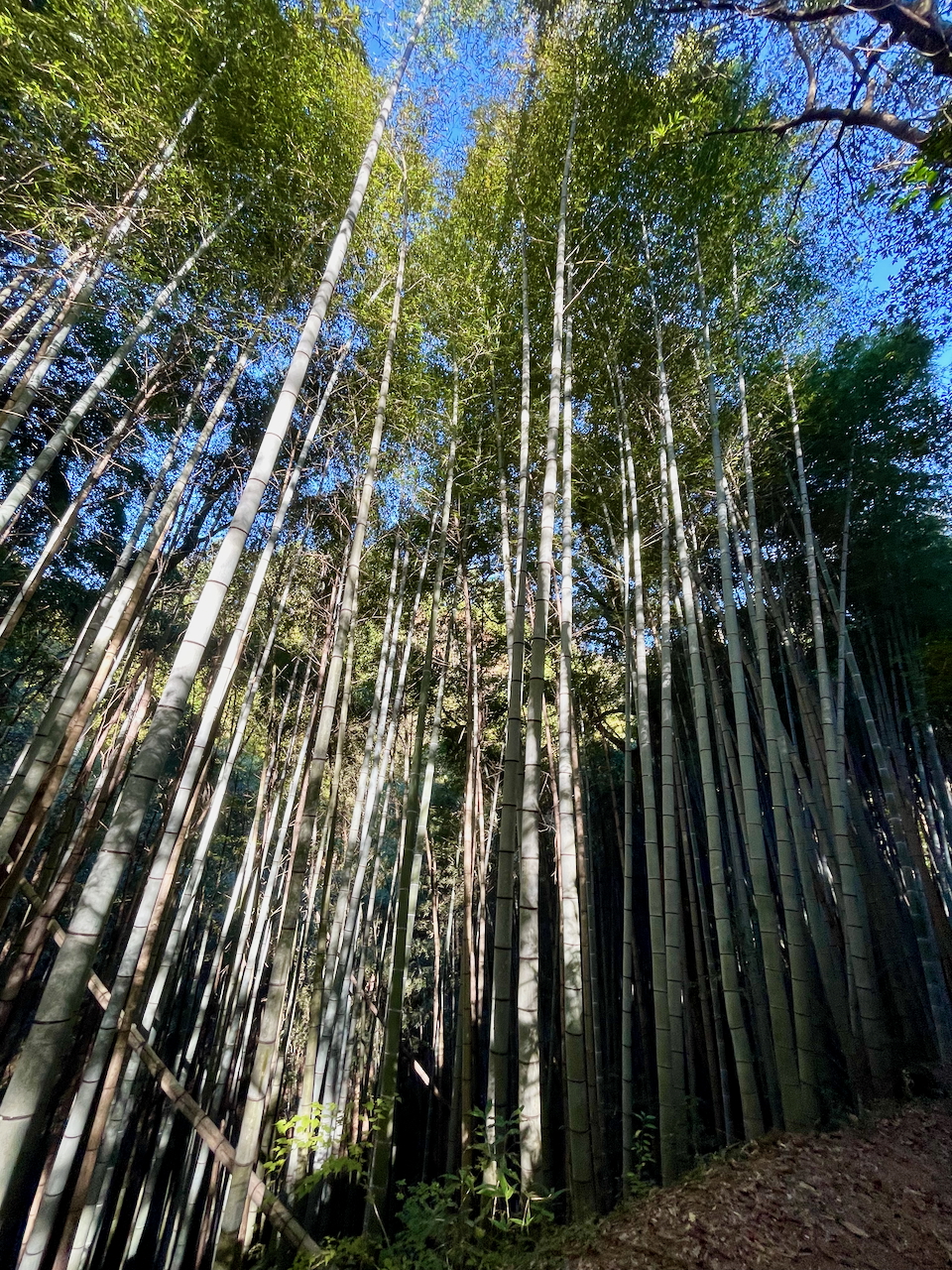
The trail departing Karuizawa was blissfully beautiful—a gentle, almost meditative start. The autumn morning light filtering through the canopy in golden shafts. The elevation gain from Karuizawa was gradual, only about 200 meters over several kilometers, making for a pleasant upward stroll.

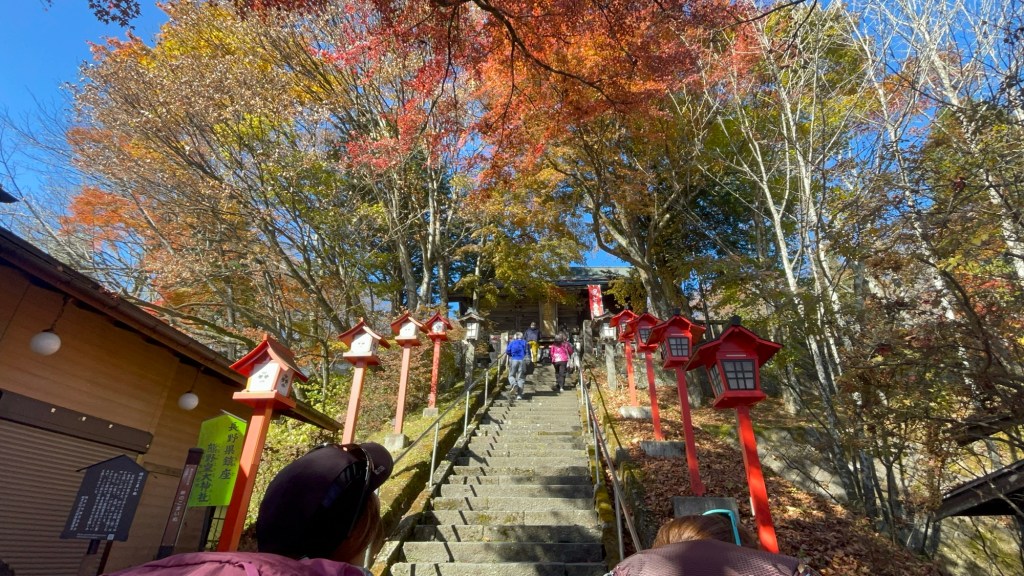
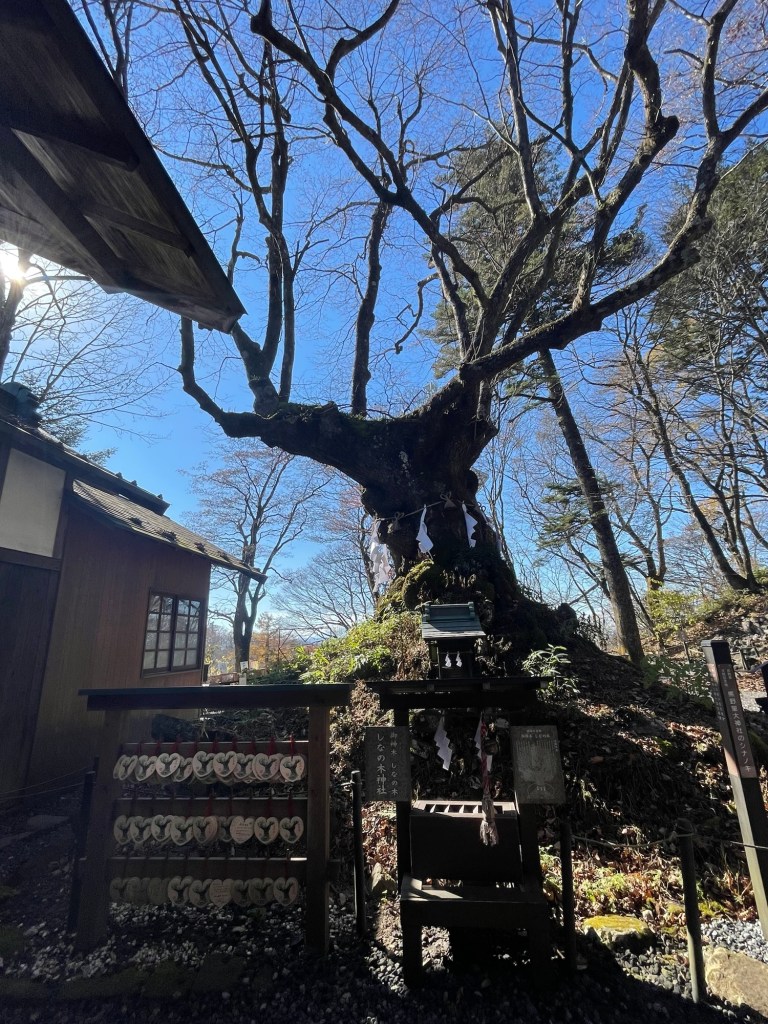
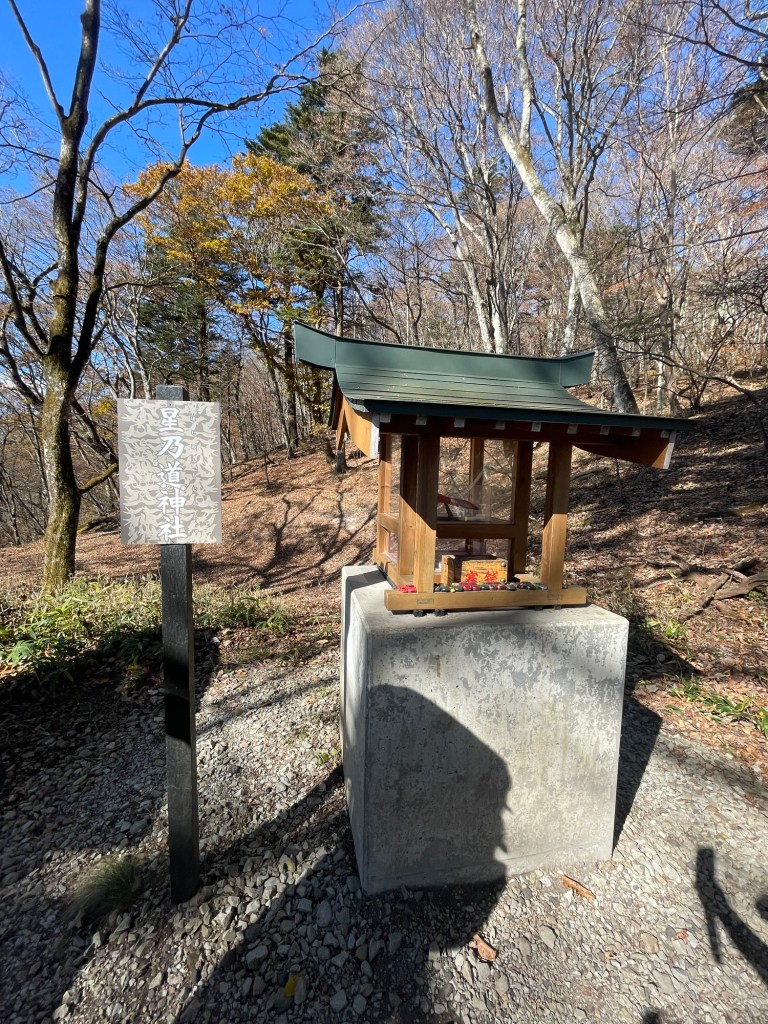
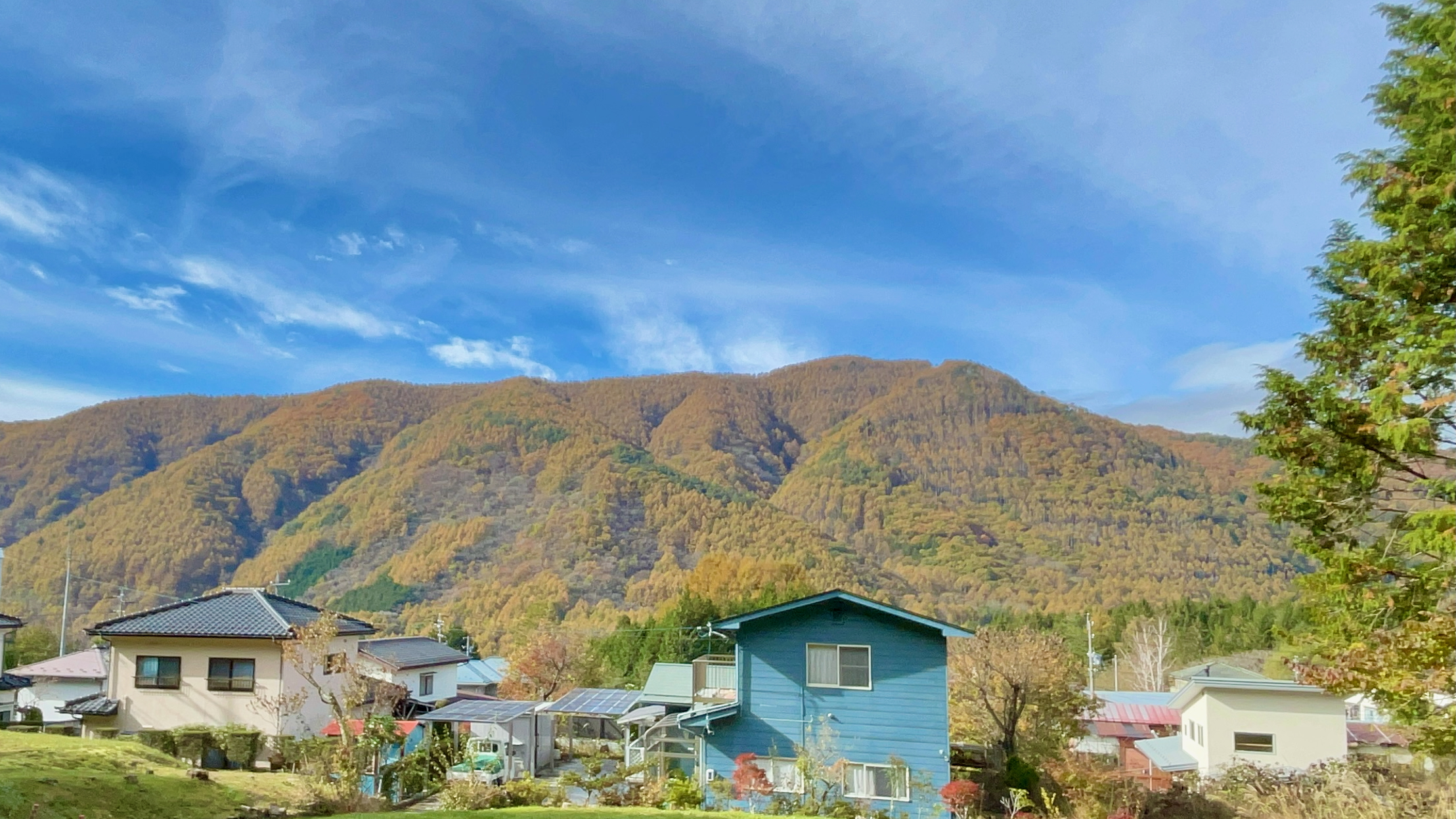
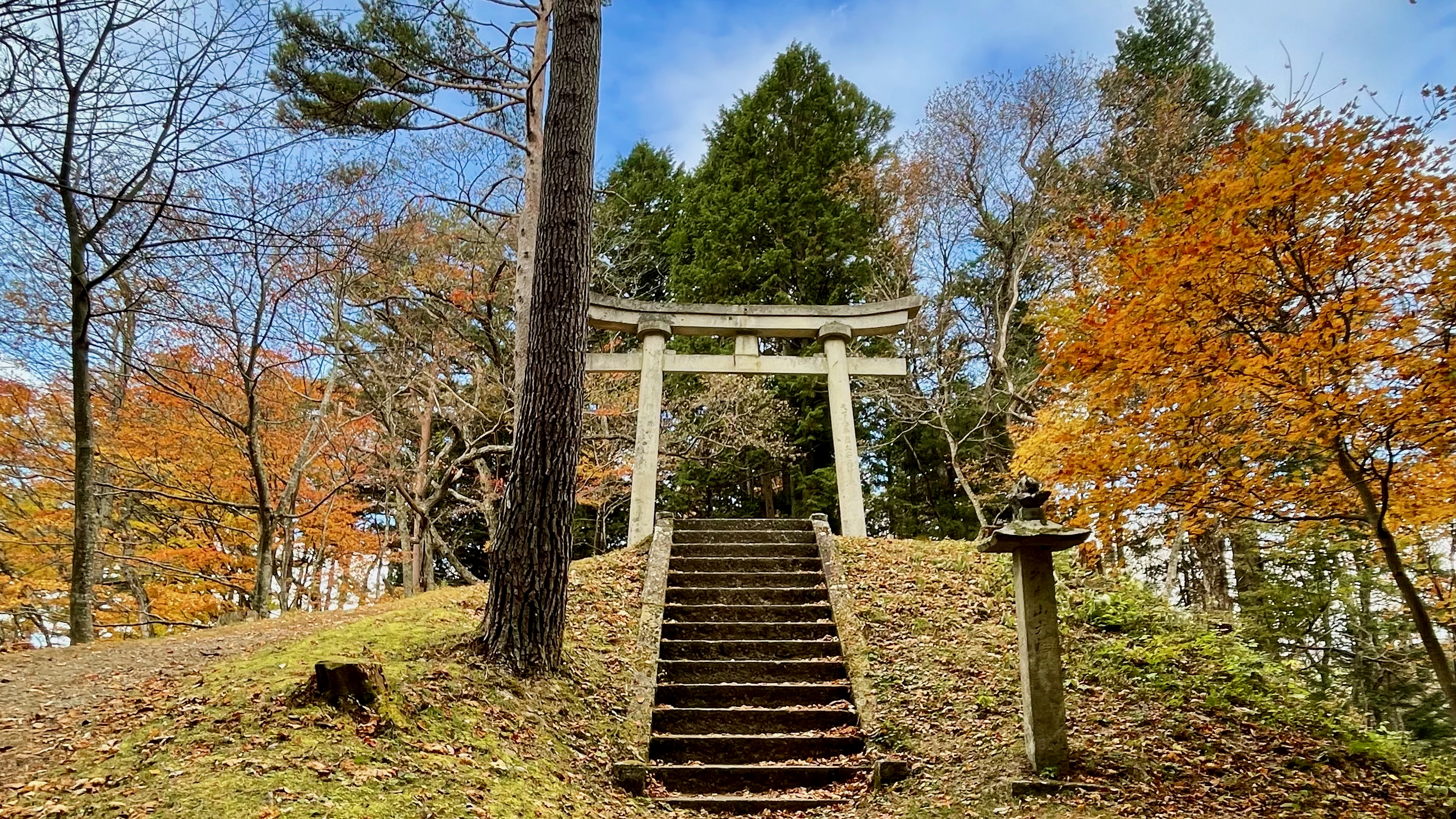
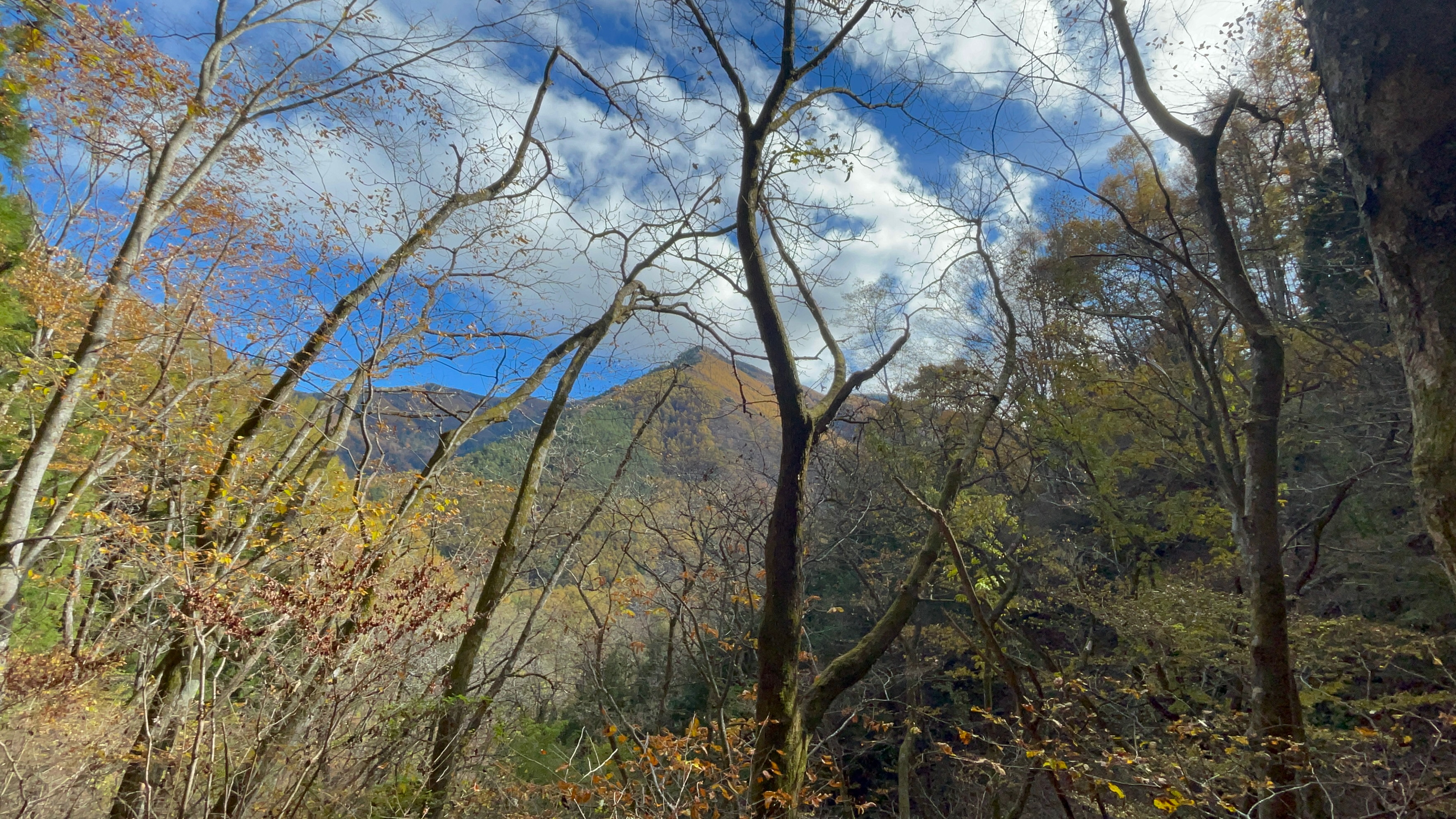
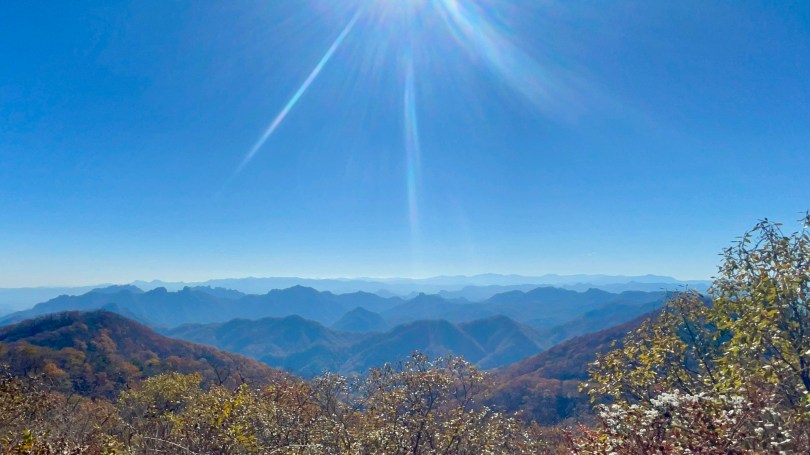
11:00 AM: We reached the summit of Usui Toge Pass 碓氷峠, marked by a traditional shrine that has stood watch over this mountain crossing for centuries. At approximately 1,200 meters elevation, the pass offers spectacular multi-mountain views that stretch across both Nagano and Gunma Prefectures. The panorama was genuinely picturesque—layer upon layer of mountain ridges receding into the misty distance, painted in the muted autumn colours of late November. There was also a post that marks the border between Nagano and Gunma Prefecture.

碓氷峠熊野神社 (Usui Toge Kumano Shrine)
Border of Karuizawa, Nagano and Annaka, Gunma
Historic shrine marking the Usui Toge Pass summit

We paused at the shrine to catch our breath, take photos, and for me, mentally prepare for what came next. The challenging part of Usui Toge isn’t the climb up—it’s the descent down. From this summit, we faced an 800-meter elevation drop down the Gunma Prefecture side.

11:30 AM: Crossing the prefecture border, we immediately noticed a change. The well-maintained, clearly marked trails of Nagano Prefecture gave way to something far more primitive. Here in Gunma, trail markers became sparse—just occasional weathered signs in Japanese that were difficult to read and harder to interpret. This was where the ryokan owner’s video became absolutely critical. We found ourselves stopping repeatedly to compare our surroundings to the footage on our phones, using distinctive trees, rock formations, and trail junctions to confirm we were still on the correct path.

Unlike our previous Nakasendo sections where we’d occasionally encounter other hikers or pass through villages, this stretch was remarkably isolated. We saw hardly anyone—perhaps one or two distant figures the entire day. The forest felt ancient and untouched.

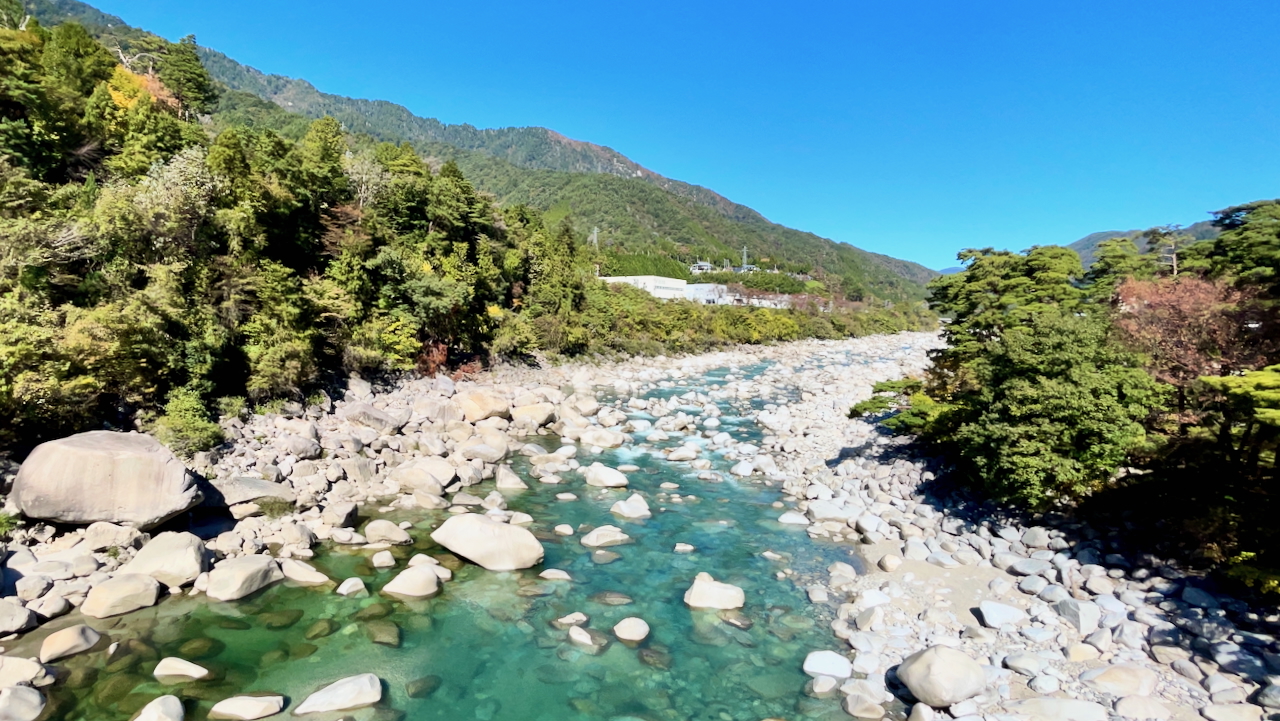
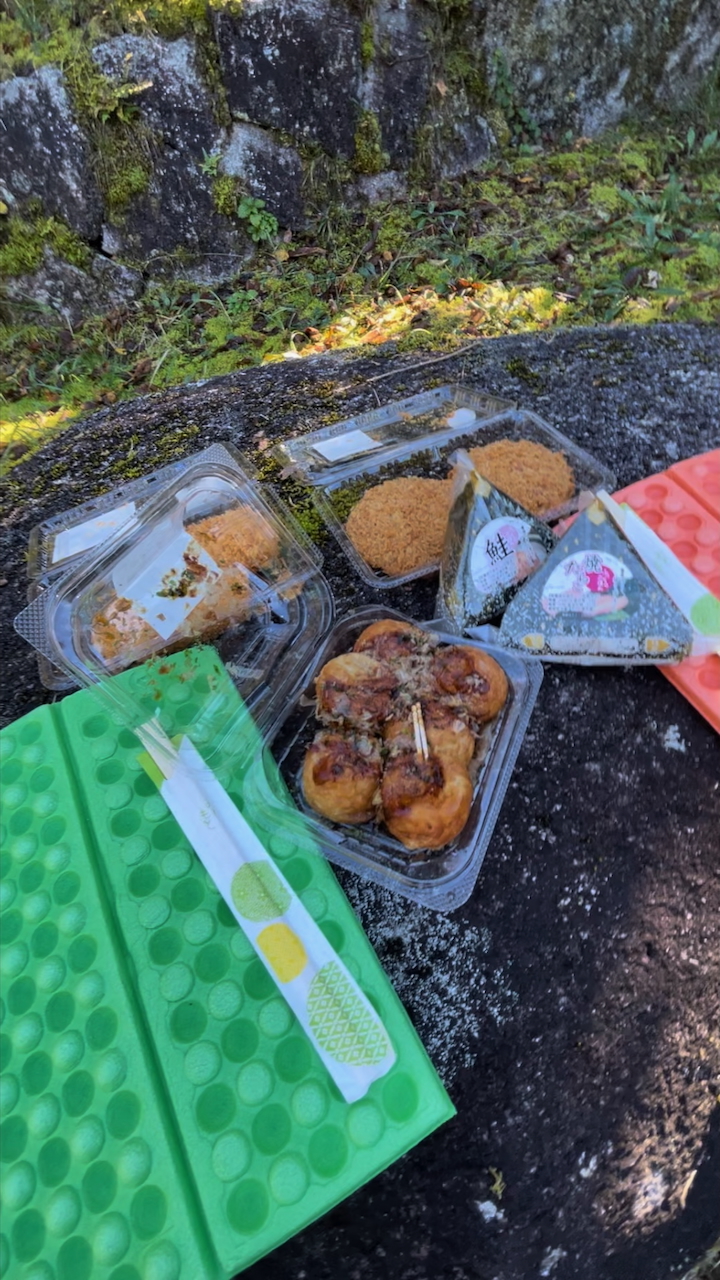
1:00 PM: Deep in the mountain forest, surrounded by nothing but trees and the sound of rustling leaves, we stopped for our packed lunch. We’d brought provisions from Karuizawa—bread, fruits, and snacks—knowing there would be absolutely no facilities or food options along this route. Sitting on a fallen log in the middle of the woods, with no buildings, no signs of civilisation, and no other people in sight, we appreciated the complete remoteness of this historic trail. The dry weather held, for which we were deeply grateful—rain would have made the descent treacherous.

3:30 PM: The descent began in earnest, and we quickly understood why Usui Toge has its fearsome reputation. The trail became increasingly steep and rocky as we dropped elevation. The final kilometer was particularly brutal—a nearly vertical scramble down loose rocks and exposed roots that demanded constant attention and careful foot placement.

In a moment of questionable judgment, exhausted by the relentless downward pitch, I sat down thinking I could slide-descend in a controlled manner. This was immediately revealed to be a not so great idea—the weight of my full hiking pack made it hard to stand back up on the rocky slope.

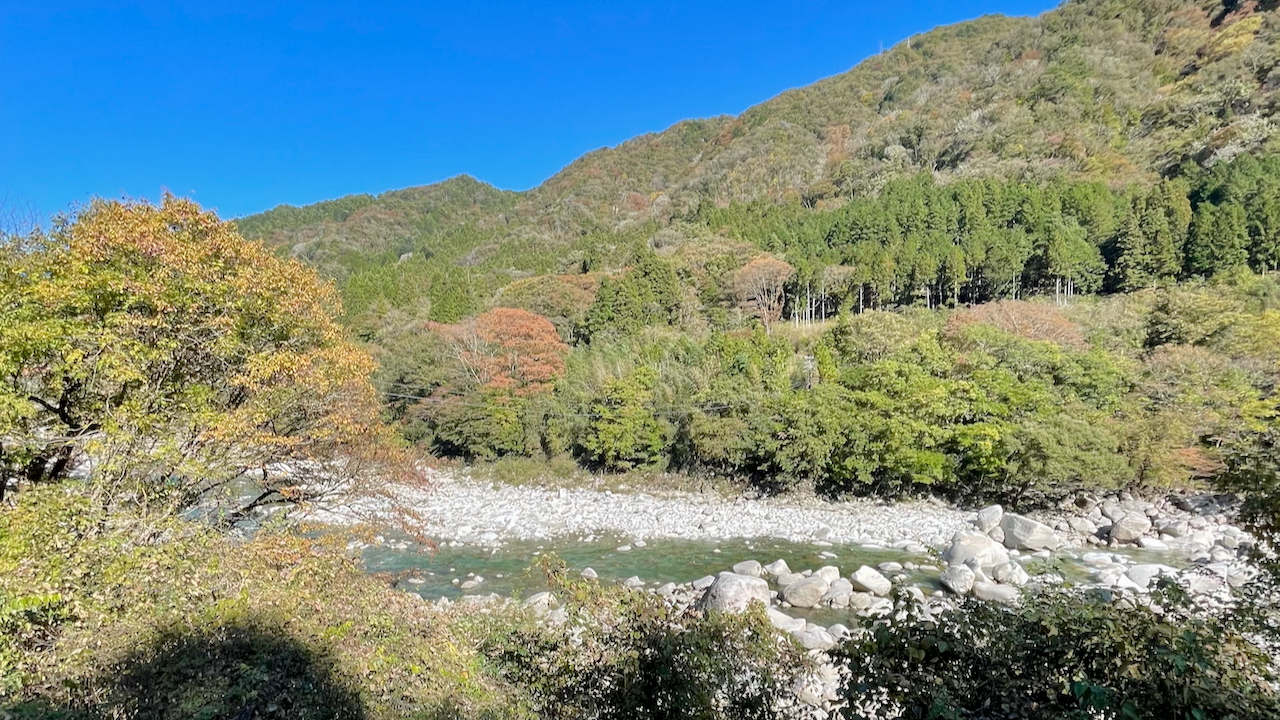
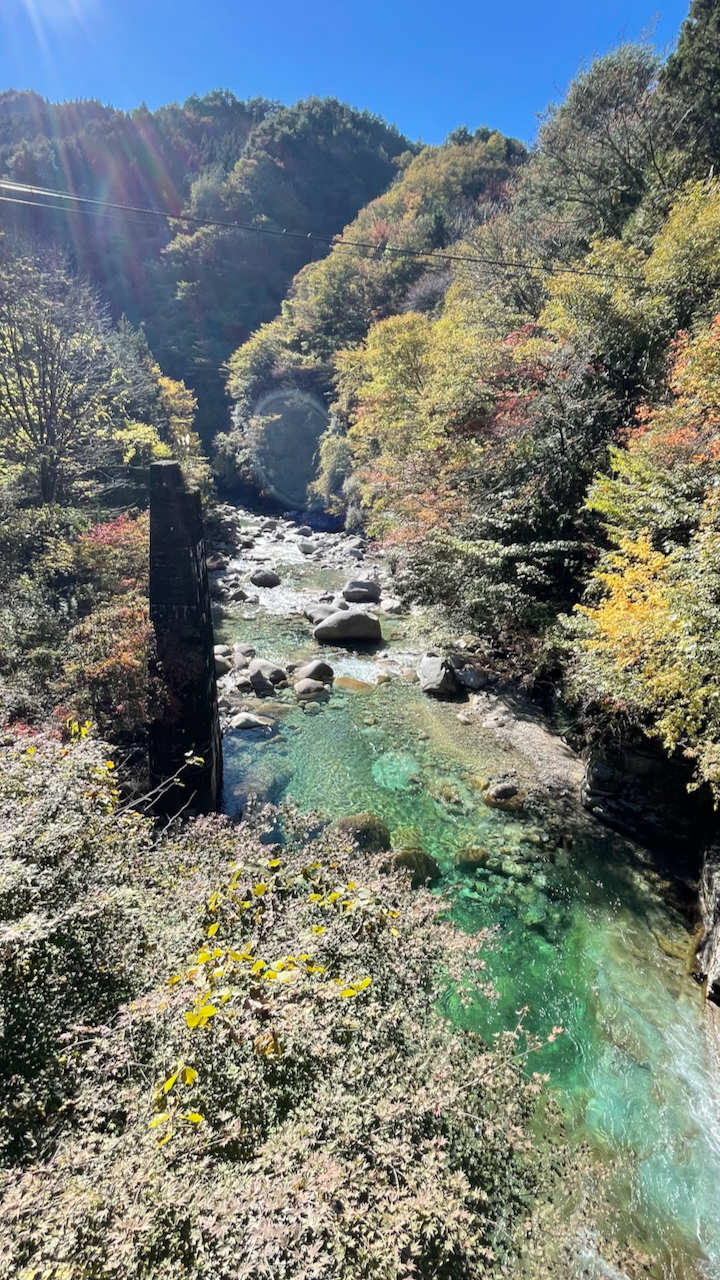
By this point, we were focused entirely on the trail itself rather than the scenery. While autumn foliage still surrounded us, I barely noticed—every bit of attention was devoted to finding secure footholds and avoiding a tumble down the mountainside.

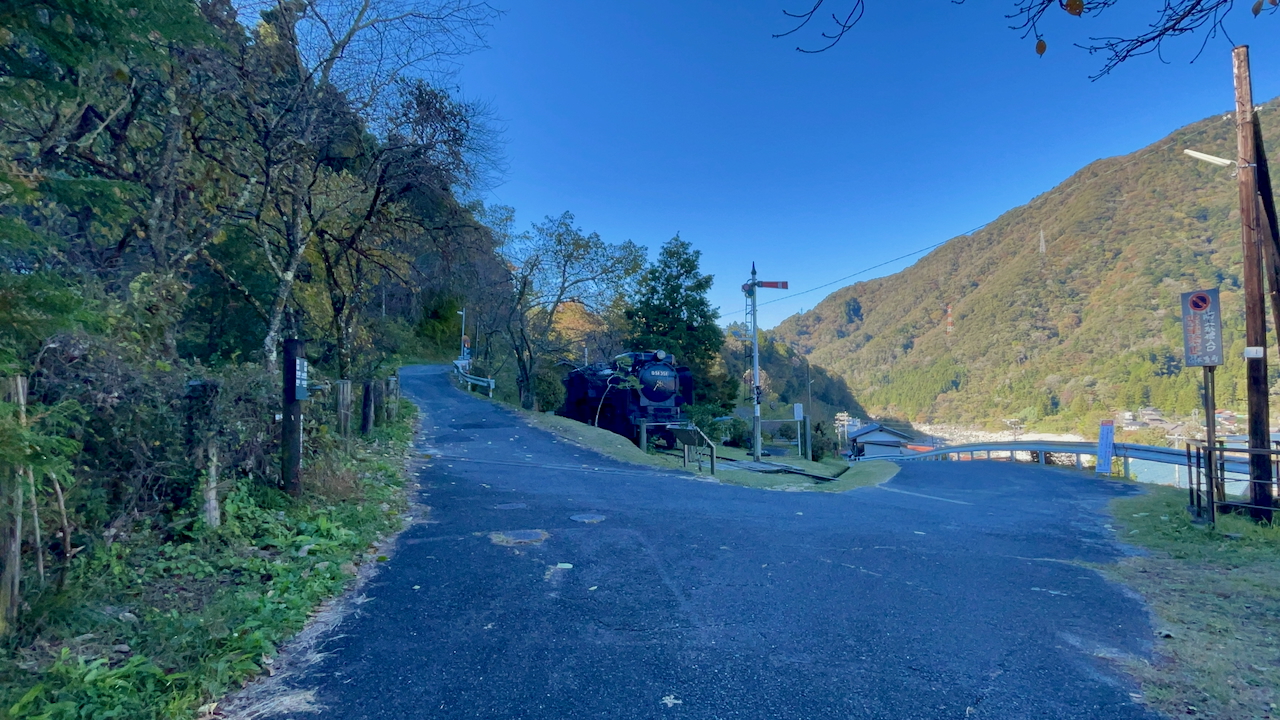
5:00 PM: We finally emerged from the forest trail and walked towards Yokokawa 横川, a small railway town that marks the eastern terminus of this Nakasendo section. The relief of reaching flat ground after that punishing descent was immense. We had been hiking for over eight hours with minimal breaks, and exhaustion was setting in. Yokokawa itself offered little—by the time we arrived, it was sundown.

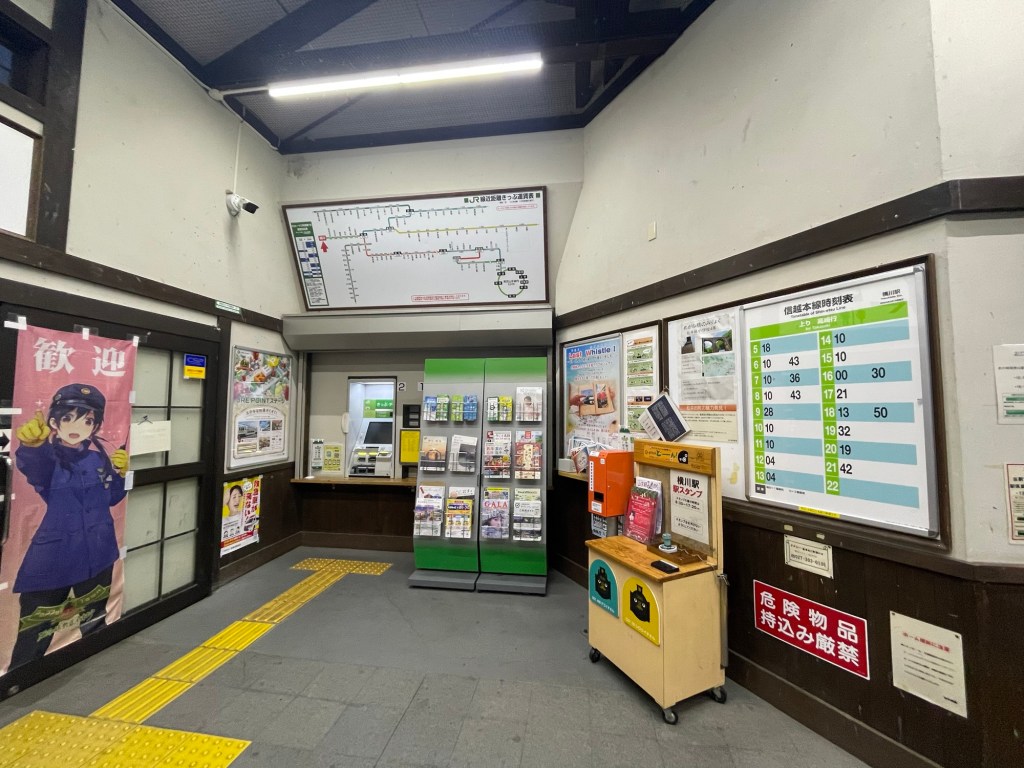
We had hoped to catch the 4:00 PM train to Takasaki, but our later-than-planned arrival meant we’d missed it. At Yokokawa Station, we collapsed onto benches, and we were too tired to do much beyond rest our aching legs and feet. The small station offered shelter and nice cold drinks from the vending machine as we waited in the gathering dusk.

5:21 PM: The Shin-Etsu Line train arrived, and we gratefully boarded for Takasaki 高崎. The 30-minute journey felt like luxury after the day’s exertion—sitting, not moving, letting the train do the work. And this marked the end of our 5 day hiking.
5:53 PM: We arrived at Takasaki Station in full darkness. Rather than exploring this city, we simply wanted to reach our accommodation and rest. We walked from the station to our lodging, the Rakuten STAY HOUSE, located in a quiet residential neighbourhood.

Rakuten STAY HOUSE x WILL STYLE Takasaki 101
〒370-0846 群馬県高崎市下和田町1丁目11-10
1 Chome-11-10 Shimowadamachi, Takasaki, Gunma 370-0846, Japan

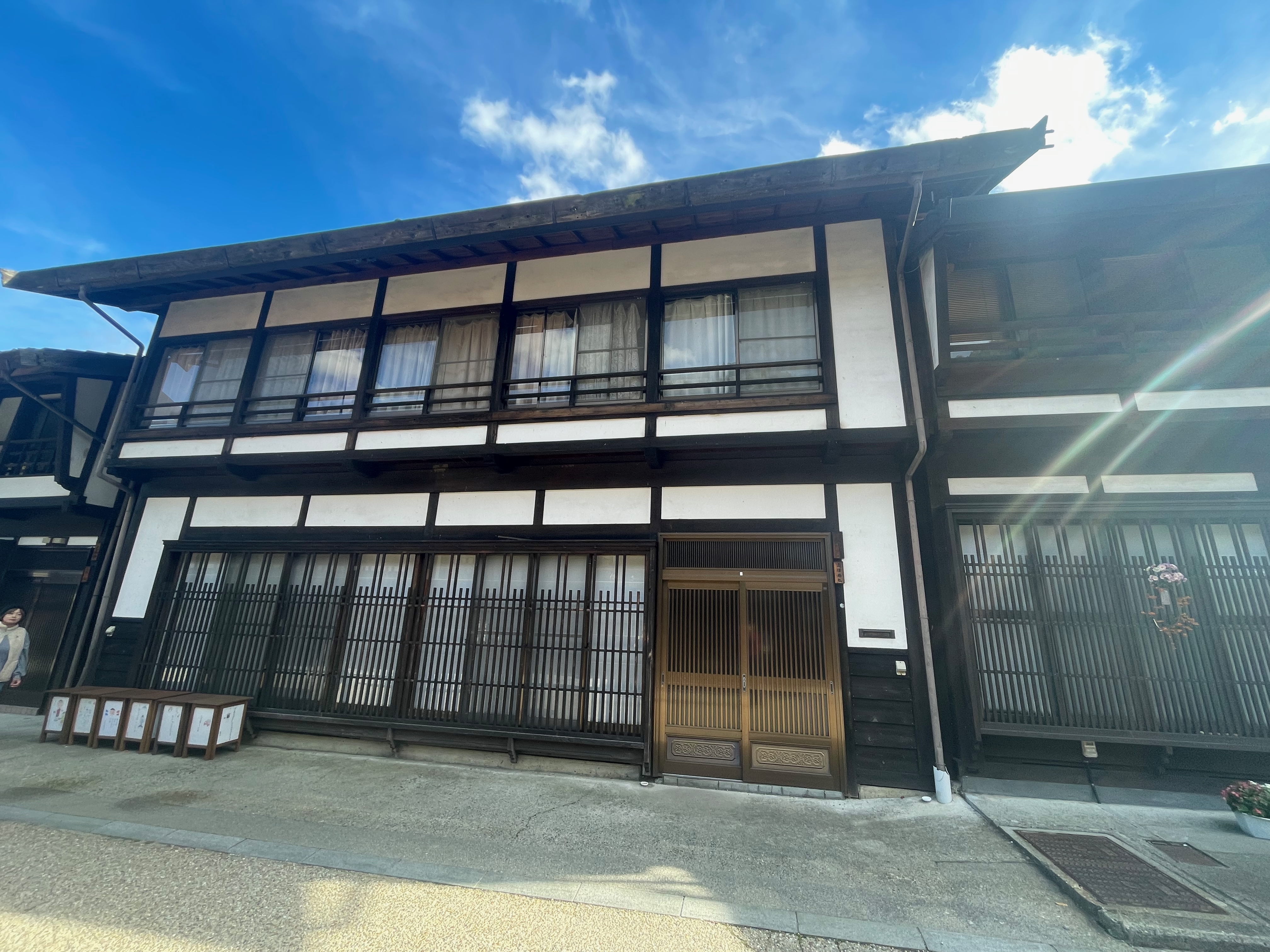
Evening: The accommodation was a standalone three-room, double-storey house that offered a glimpse into what a typical Japanese family home might look like. With multiple bedrooms, a full kitchen, and living spaces, it felt spacious and homey. Having this private space to spread out and decompress was exactly what we needed.

Too exhausted to venture out for dinner in an unfamiliar city, we prepared a simple meal using camp provisions we’d brought along. We’d actually packed these specifically to try them out—practice for future possible hiking trips. It was basic but satisfying, and honestly, after conquering Usui Toge, even simple food tasted like a feast.

Day 5 had taken approximately 10 hours from hotel departure to arrival at our Takasaki accommodation. The ryokan owner’s video was critical—without it, we would have struggled significantly in the poorly marked Gunma sections. We had covered roughly 14 kilometers with a 1-kilometer elevation drop, accumulating 33,037 steps—our highest count of the entire journey. More importantly, we had successfully navigated one of the Nakasendo’s most challenging and historically significant sections.

This was my first multi-day hiking experience, and completing it is a major accomplishment! Five days, four mountain passes, countless steps, and one unforgettable journey through Japan’s historic mountain interior. The Nakasendo Trail is a good trail for a beginner like me and also rewarded us with stunning natural beauty, and profound historical connections.

Tomorrow, we would leave the Nakasendo and continue our journey to Kusatsu Onsen 草津温泉, one of Japan’s most famous hot spring towns. After five days of mountain hiking, onsen soaking is rewarding! The hiking portion of our adventure was complete, but the journey continued with relaxation, good food, and well-deserved rest.

Note: This trip was made in November 2024.

Trail 4: A Rest Day in Matsumoto and Journey to Karuizawa

Day 4 Summary:
8:30 AM: Breakfast at Abe Coffee
10:00 AM: Reach Agatanomori Park あがたの森公園 for autumn colours on foot
11:00 AM: Explore Nakamachi Shopping Street 中町通り
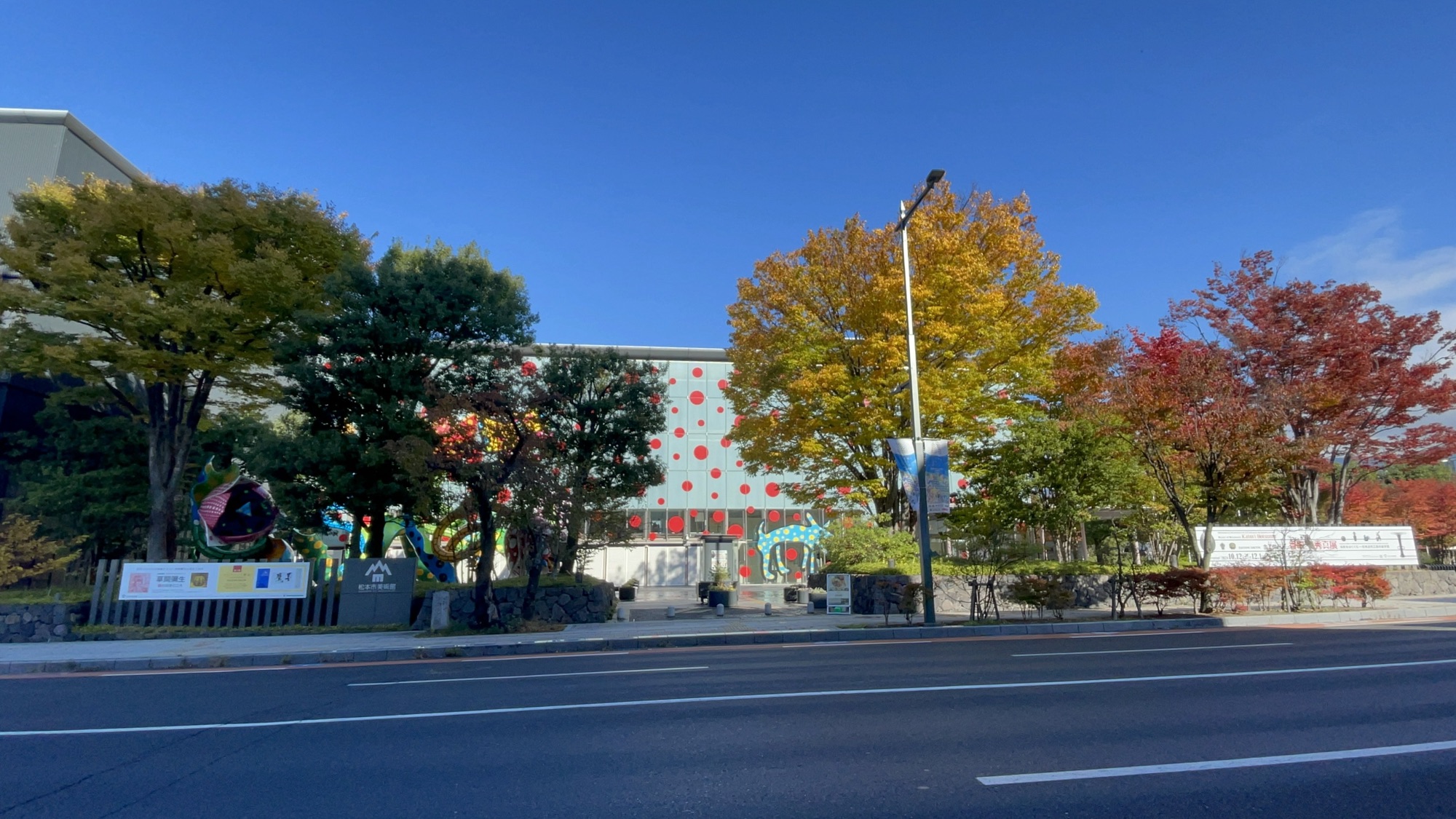
11:30 AM: Reach Matsumoto Castle 松本城 on foot
12:15 PM: Lunch at Sobaya Kamakuraya 蕎麦屋 鎌倉屋
1:15 PM: Return to hotel for luggage,
2:06 PM: Depart Matsumoto Station 松本 via Shinano to Nagano 長野
3:25 PM: Depart Nagano Station 長野 via Asama 622 to Karuizawa 軽井沢
4:30 PM: Arrive at Karuizawa, stock up provisions at Old Karuizawa 旧軽井沢
Evening: Check-in at Hotel Tsuruya and dinner at Sujyu Masayuki

After three consecutive days of hiking the Nakasendo through the Kiso Valley, Day 4 was a welcome rest day—a chance to let our tired legs recover while exploring Matsumoto’s cultural treasures before continuing our journey to the next section of the Nakasendo in Karuizawa. While Matsumoto itself is not part of the historic Nakasendo trail, this castle town served as the perfect stopover point between the Kiso Valley post towns we’d been hiking and the challenging Usui Toge Pass section that awaited us. With no mountains to climb today, we could finally walk at a leisurely pace and enjoy urban sightseeing without the weight of our hiking packs.

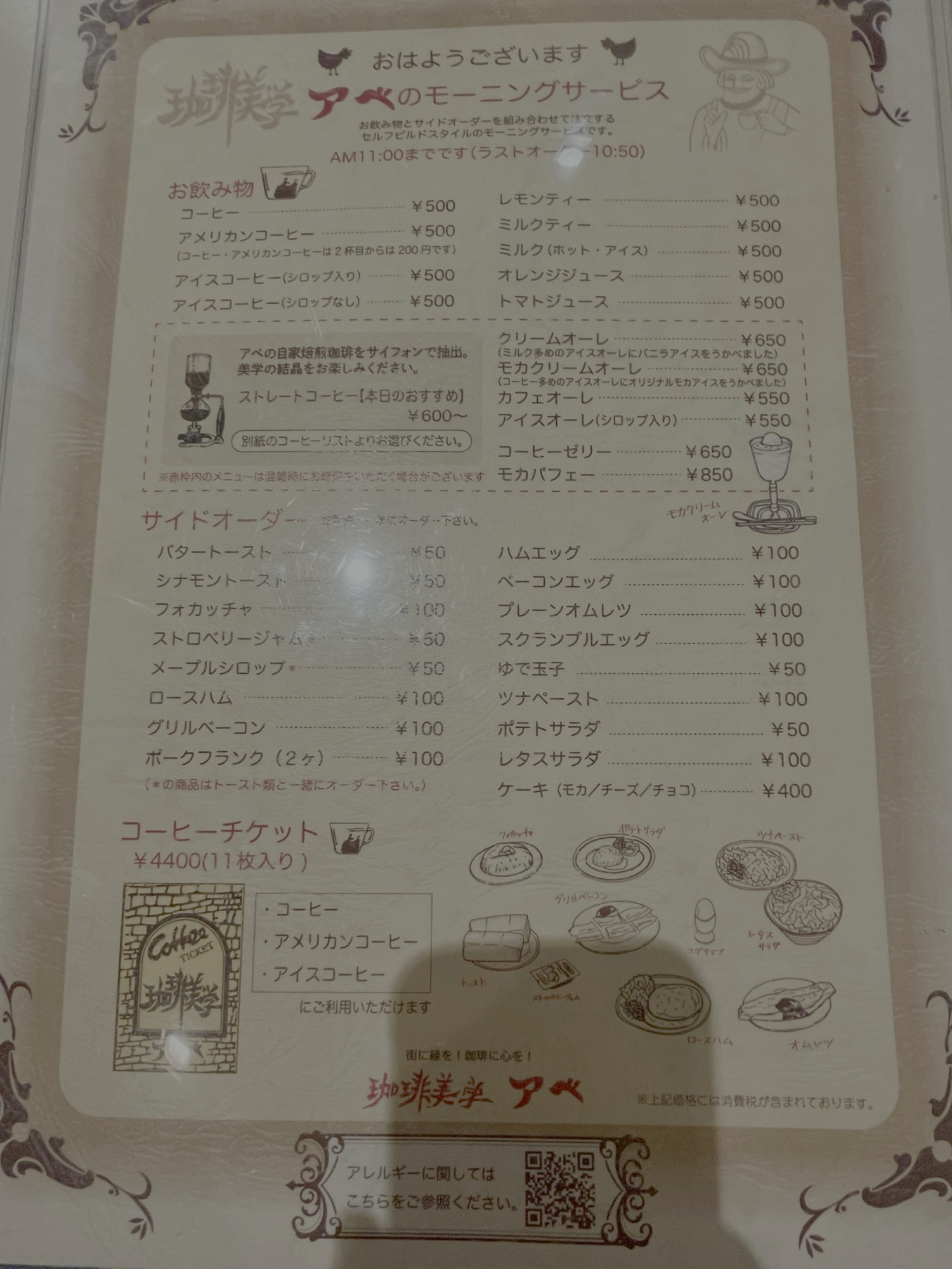
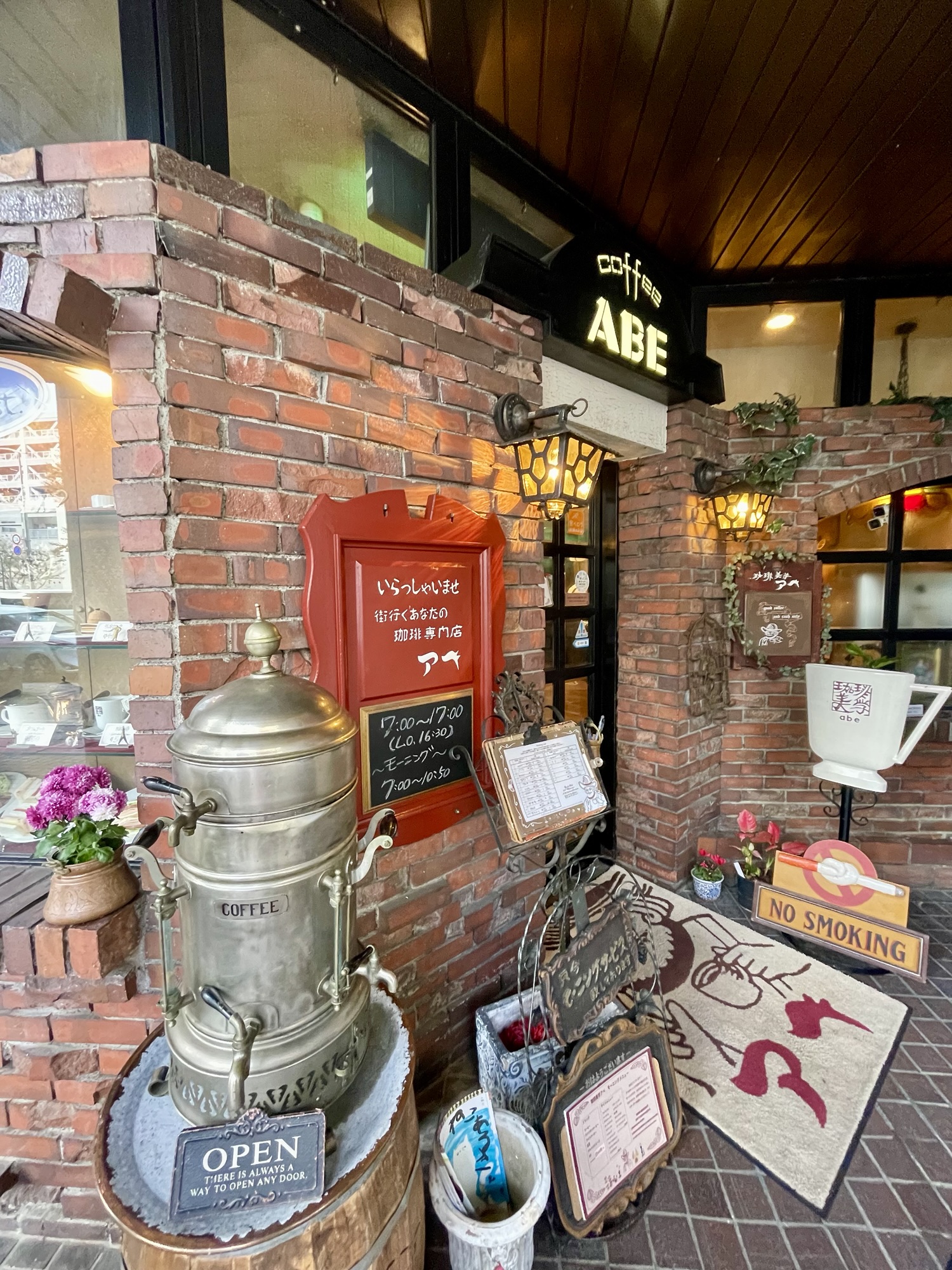
8:30 AM: We started the morning with a relaxed breakfast at Abe Coffee, a cozy café near our hotel. It was a small, quaint coffee shop with quality coffee and breakfast sets.

珈琲美学 アベ Abe Bigaku Coffee
Japan, 〒390-0815 Nagano, Matsumoto, Fukashi, 1 Chome−2−8 NOVAビル
Local coffee and breakfast

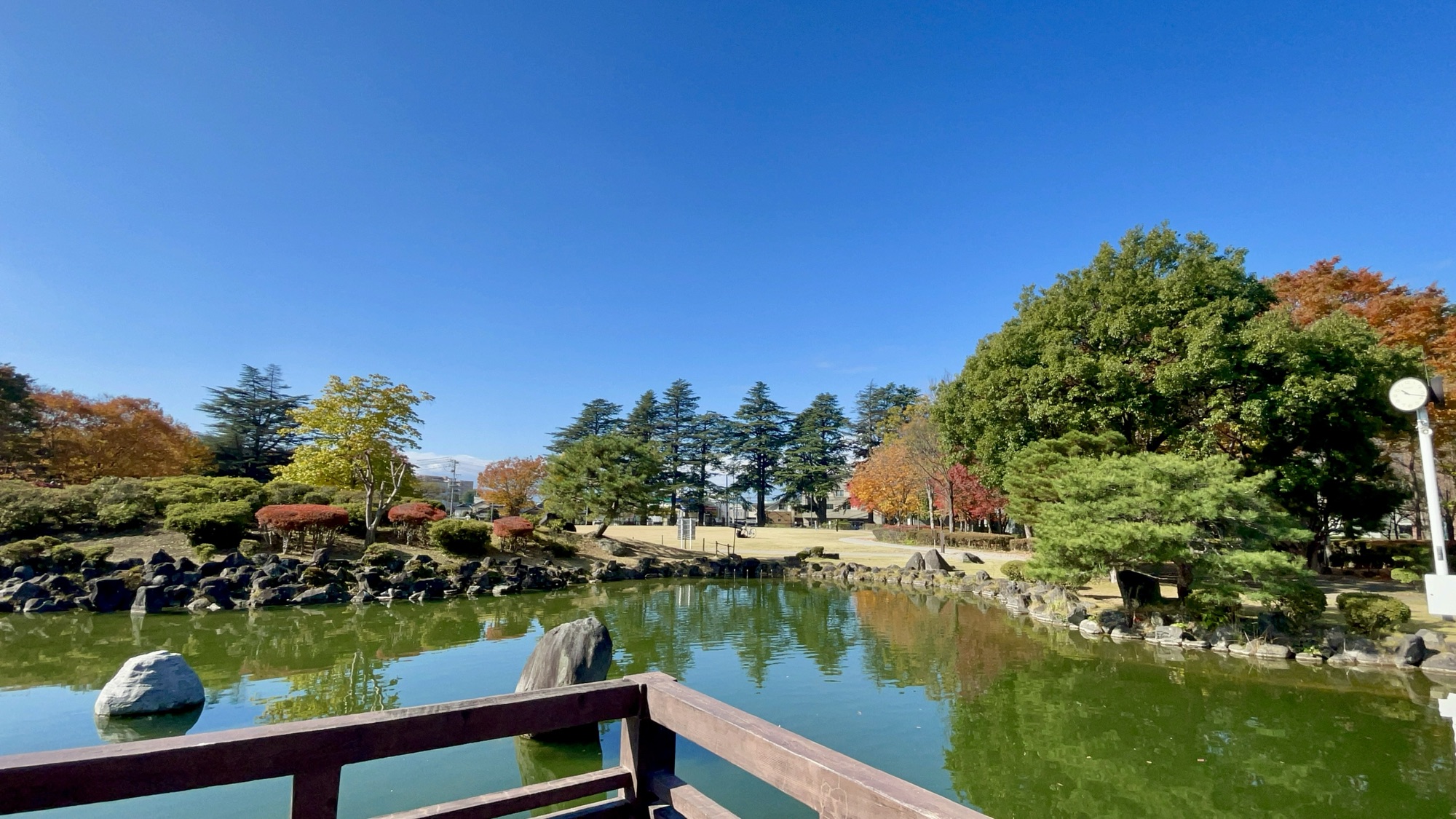
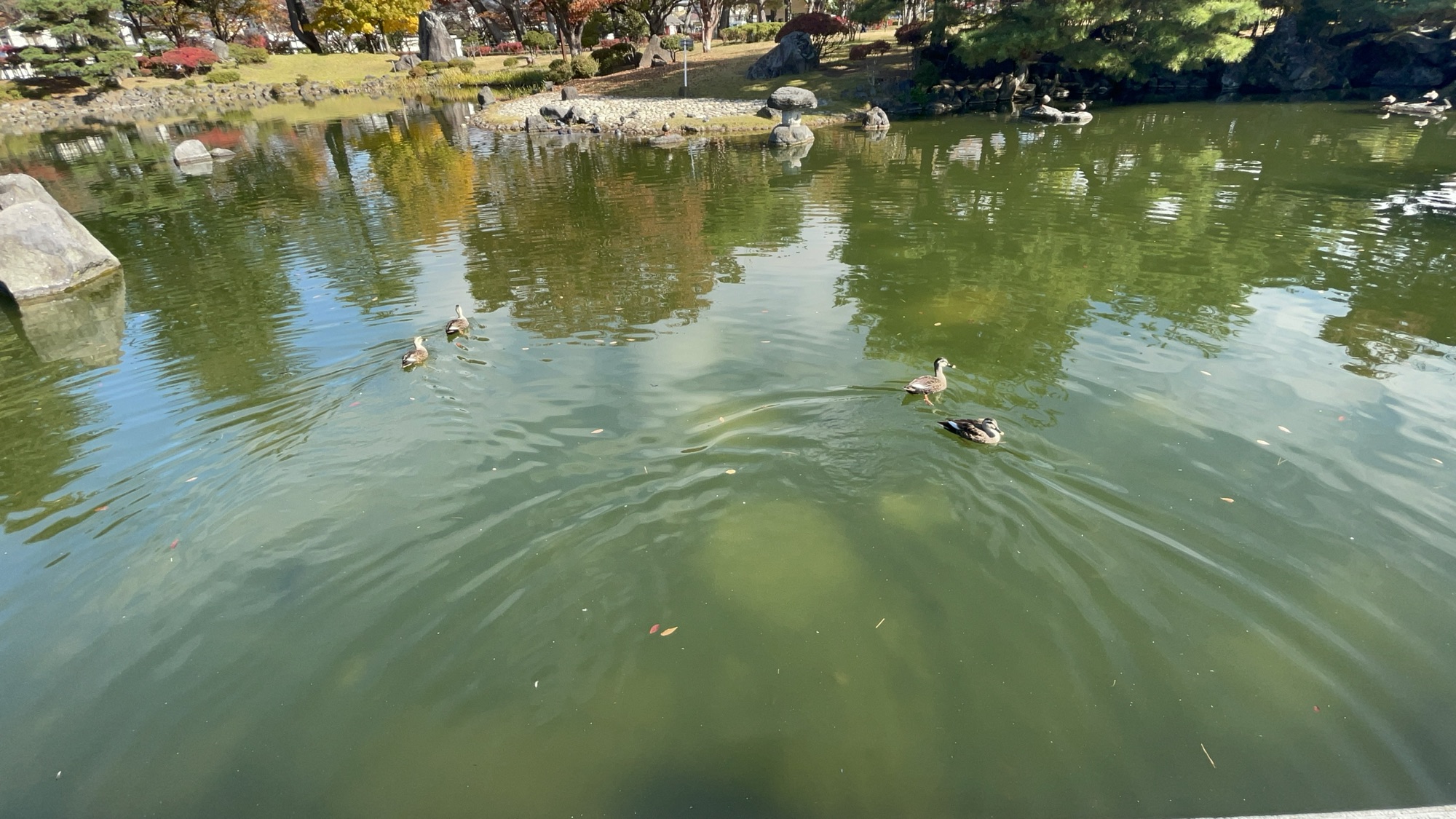
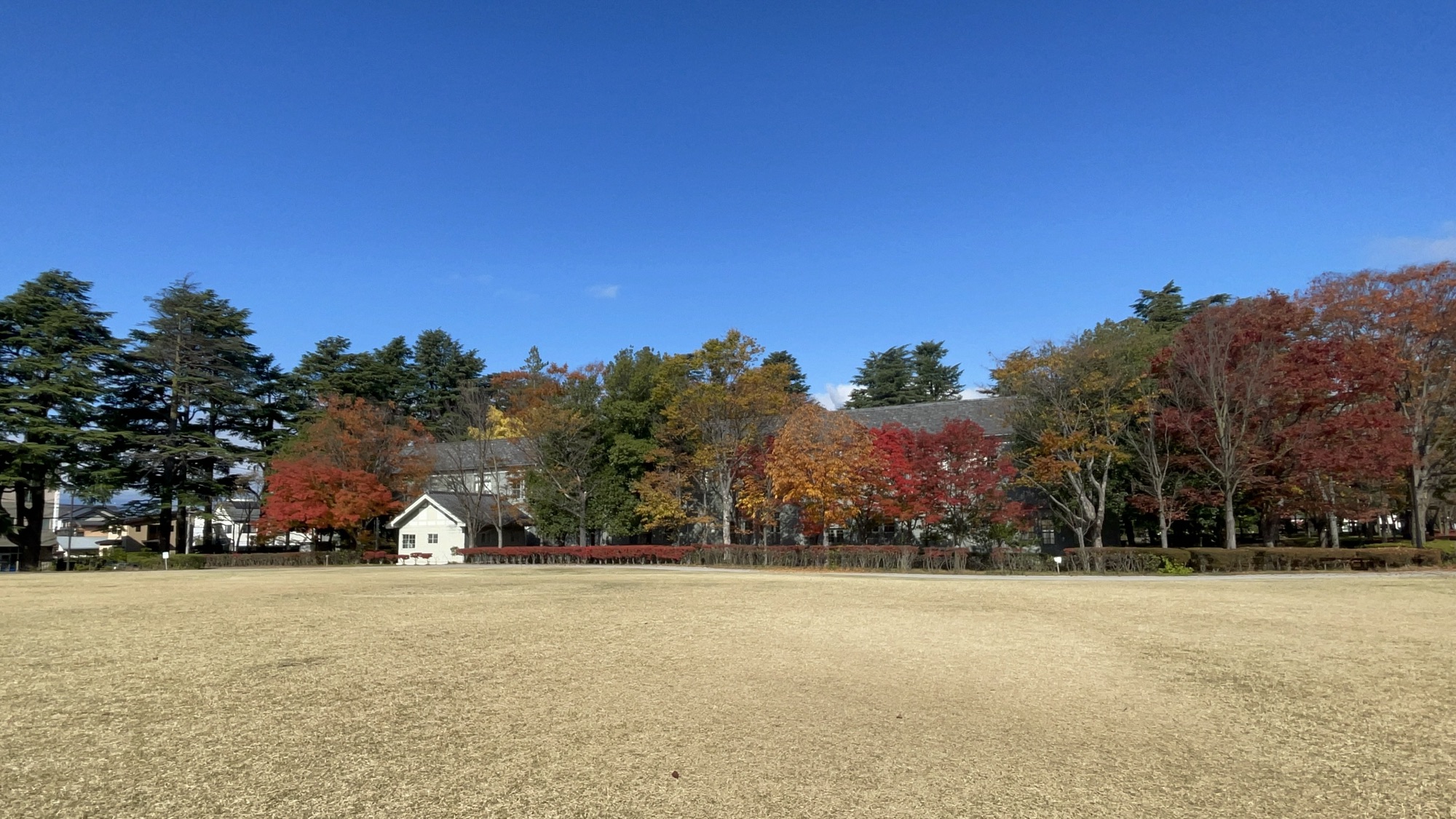
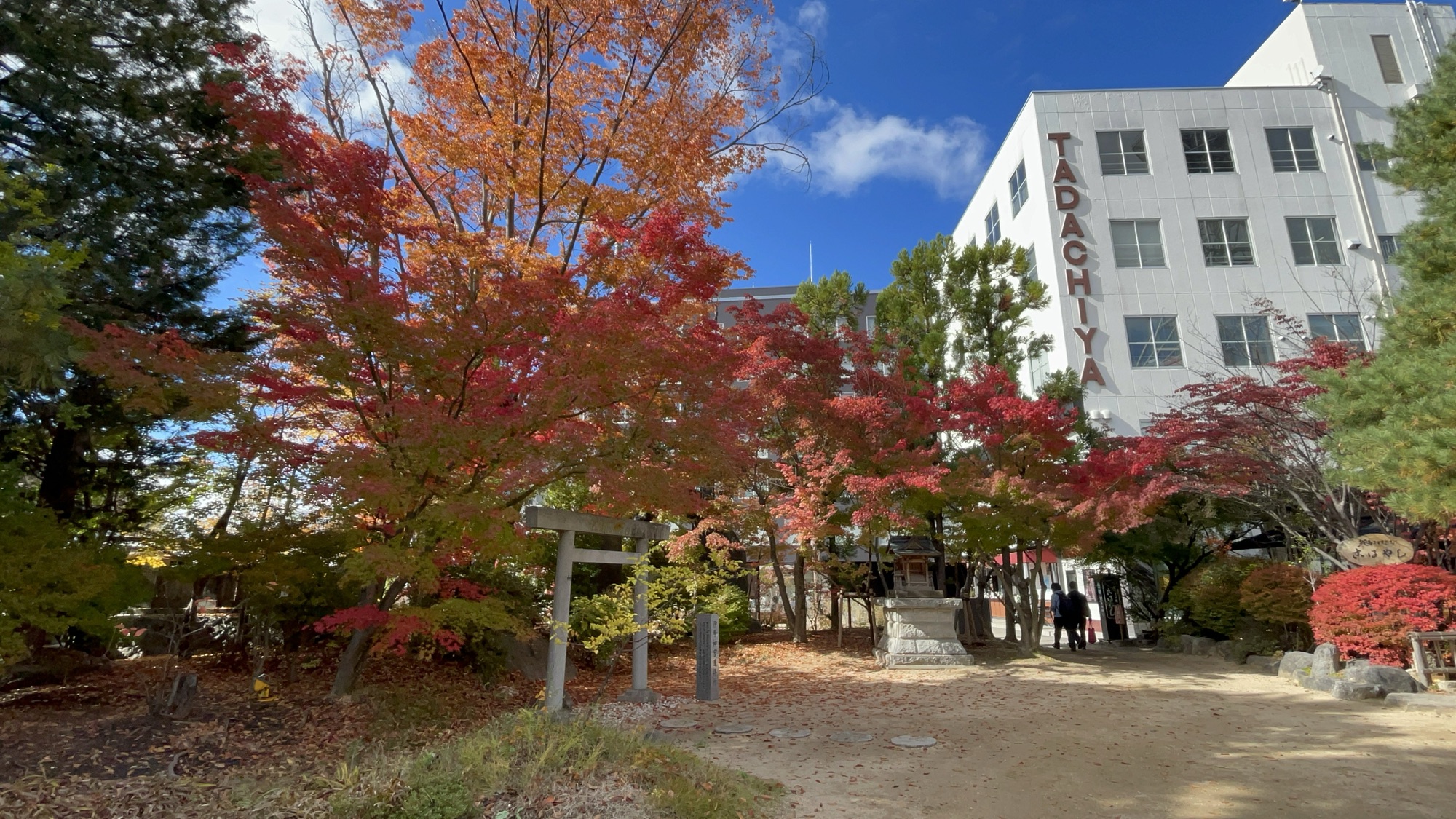
10:00 AM: Our first stop was Agatanomori Park あがたの森公園, a beautiful public park that showcases Matsumoto’s autumn colours. The park’s expansive grounds featured stunning fall foliage—brilliant reds, oranges, and golds. The historic Western-style school buildings on the park grounds added architectural interest, creating a peaceful blend of nature and history. It was the perfect gentle start to our sightseeing day.

あがたの森公園 (Agatanomori Park)
〒390-0812 長野県松本市県3丁目1-1
3 Chome-1-1 Agata, Matsumoto, Nagano 390-0812, Japan
Beautiful autumn colours and historic school buildings

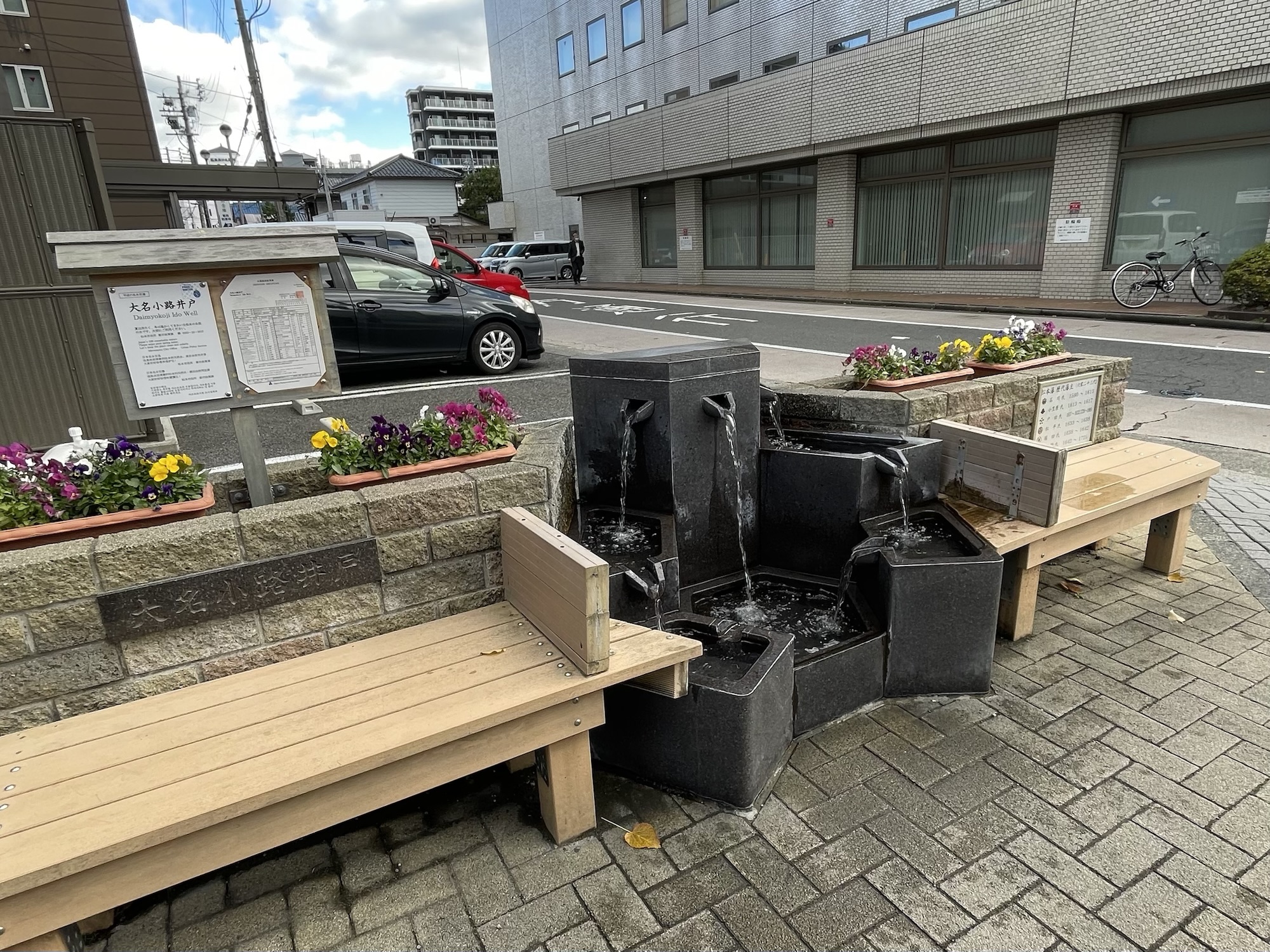
As we walked from the park toward Matsumoto Castle, we discovered one of the city’s unique treasures—its natural spring water wells. Matsumoto sits atop a subterranean aquifer that has provided fresh mountain water to the city since the Edo period. Throughout the town, there are around 20 public wells where locals and visitors alike can freely drink the crisp, cold spring water that bubbles up from deep underground.

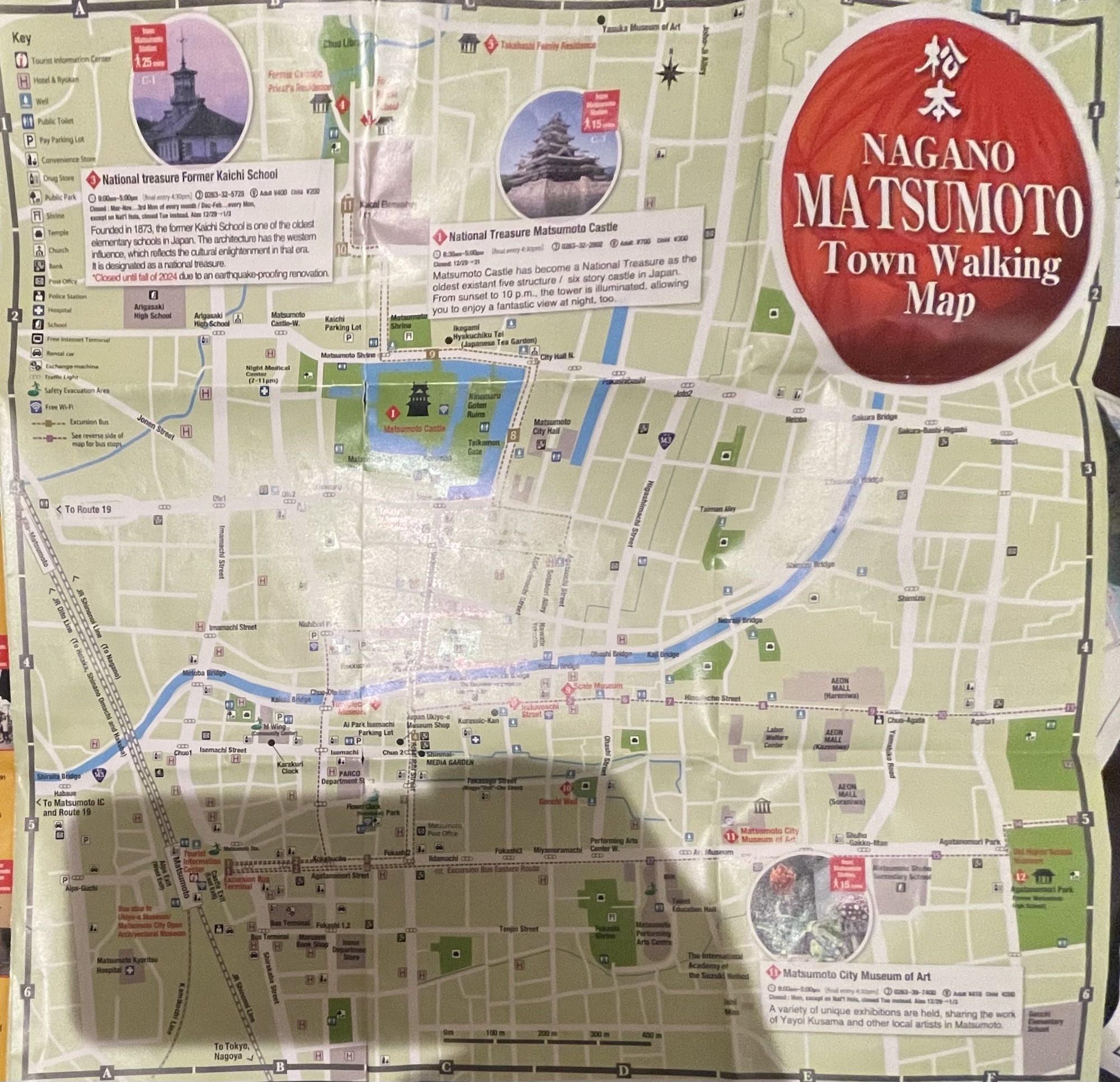
En route to the castle, we came across the Hinode no Ido Well 日の出の井戸, one of many wells marked on the tourist maps distributed by the city. We stopped to try the water, using the communal ladle to scoop the crystal-clear spring water. It was refreshingly cold and delicious. These public wells are maintained by Matsumoto City and have been in continuous use for centuries. The spring water tradition is so integral to Matsumoto’s identity that the city is often called “the City of Spring Water.

11:00 AM: As we walked toward Matsumoto Castle 松本城, we got delightfully distracted along the way! The charming shopping streets leading to the castle were filled with craft shops, cafes, and local boutiques that demanded exploration. We wandered through Nakamachi Shopping Street 中町通り, a beautifully preserved merchant district with traditional white-walled kura storehouses converted into shops and galleries.

It was here, completely spontaneously, that I found a small ceramics shop run by a local craftsman. As someone who collects cups from my travels, I could not resist browsing his work. I purchased a beautiful handmade ceramic cup—a perfect memento of Matsumoto.

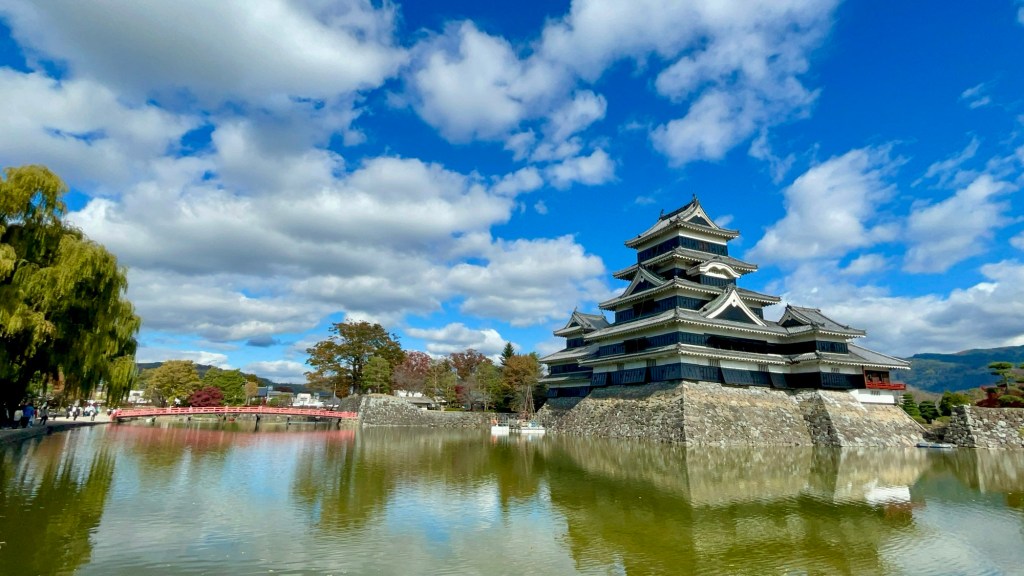
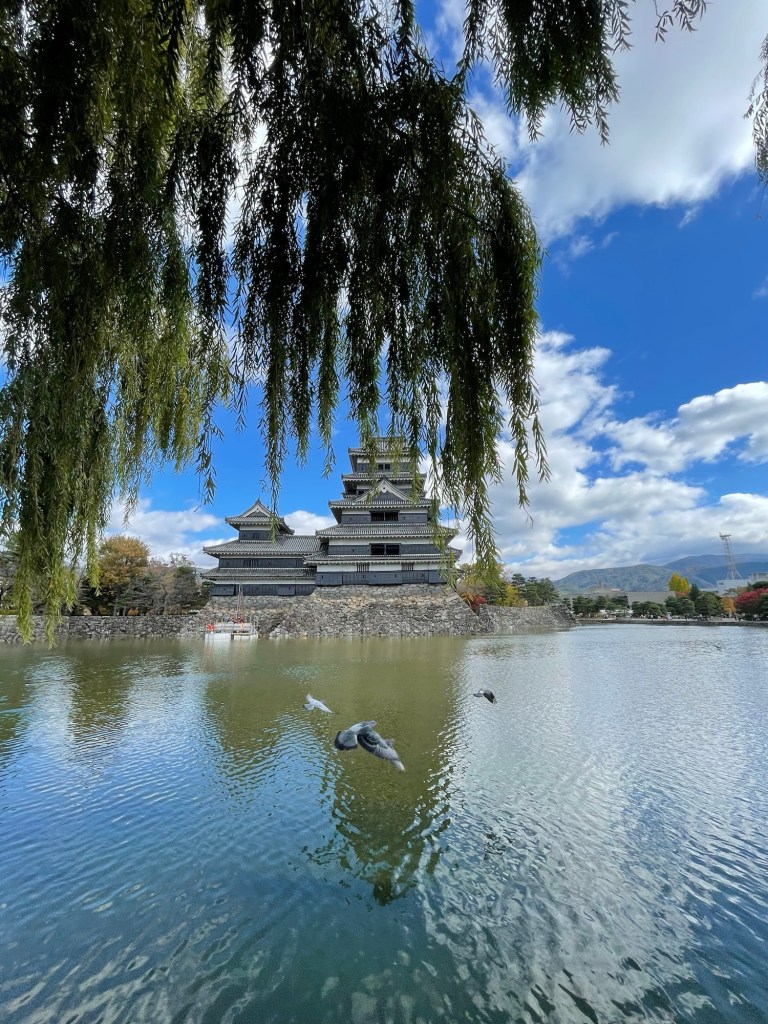
11:30 AM: We finally reached Matsumoto Castle. It has a striking black exterior, earning it the nickname “Crow Castle.” The castle’s elegant five-tiered keep is one of Japan’s twelve original surviving castles, dating back to the late 16th century.

松本城 (Matsumoto Castle)
〒390-0873 長野県松本市丸の内4-1
4-1 Marunouchi, Matsumoto, Nagano 390-0873, Japan
営業時間: 要確認 Operating Hours: Please check
One of Japan’s twelve original castles

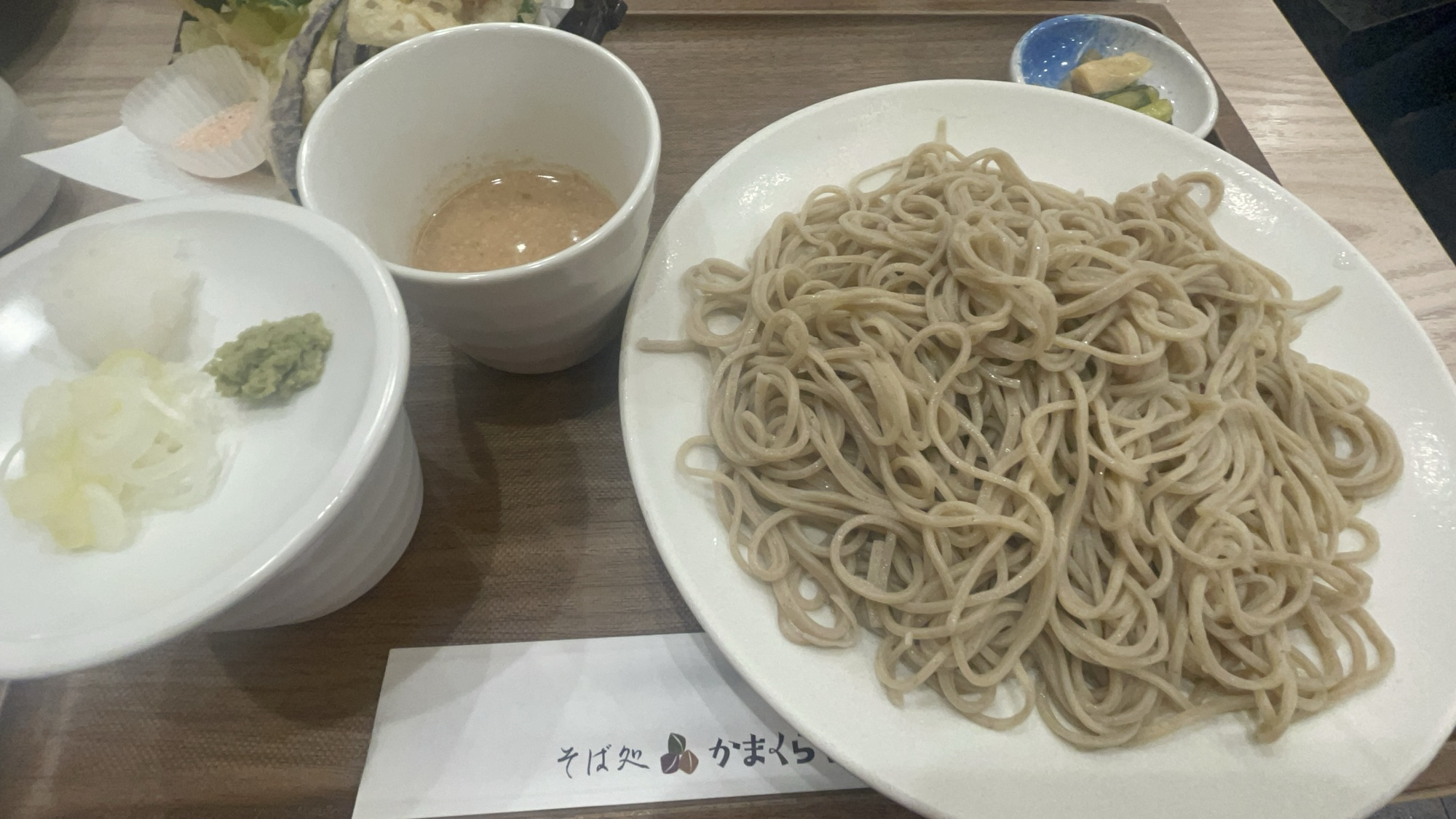
12:15 PM: With train schedules to keep, we needed to squeeze in lunch before our departure. We chose Soba ya Kamakuraya 蕎麦屋 鎌倉屋, a well-regarded soba restaurant in Matsumoto. Their specialty was soba paired with tempura, and the combination was excellent—the buckwheat noodles had that perfect texture, and the tempura was light and crispy. It was a satisfying meal that reminded us once again how consistently good the soba had been throughout our journey along the Nakasendo.

蕎麦屋 鎌倉屋 (Soba ya Kamakuraya)
Matsumoto, Nagano
営業時間: 要確認 Operating Hours: Please check
Specialty soba and tempura

2:06 PM: From Matsumoto Station 松本, we boarded the Shinano limited express bound for Nagano 長野. At Nagano Station 長野, we transferred to the Asama 622 Shinkansen—a quick, efficient ride that would take us to Karuizawa 軽井沢 in under an hour. We were now traveling to Karuizawa, which marked the eastern end of the Nakasendo trail and would be the starting point for our final hiking day.

4:30 PM: Karuizawa immediately felt different from anywhere else we had visited on this trip. This mountain resort town at 1,000 meters elevation has a distinctly Western atmosphere—a legacy of its history as a popular summer retreat for foreign missionaries and diplomats in the late 19th century.

Our first priority was food and provisions. Tomorrow would bring our final and most challenging Nakasendo hike—from Karuizawa to Usui Toge Pass 碓氷峠 and on to Yokokawa 横川. The Usui Toge Pass was one of the three most difficult passes on the historic Nakasendo, notorious during the Edo period for its steepness and remoteness. We needed to stock up on food for both tonight’s dinner prep and tomorrow’s long hike.

We made our way to Old Karuizawa 旧軽井沢, the historic shopping street that forms the heart of the town’s original resort area. The street was lined with bakeries, grocery stores, and specialty food shops. We gathered bread, snacks, and fresh fruit—essential fuel for what we anticipated would be a demanding day. Note that the shops close at sundown, so it is important to quickly grab what you need!

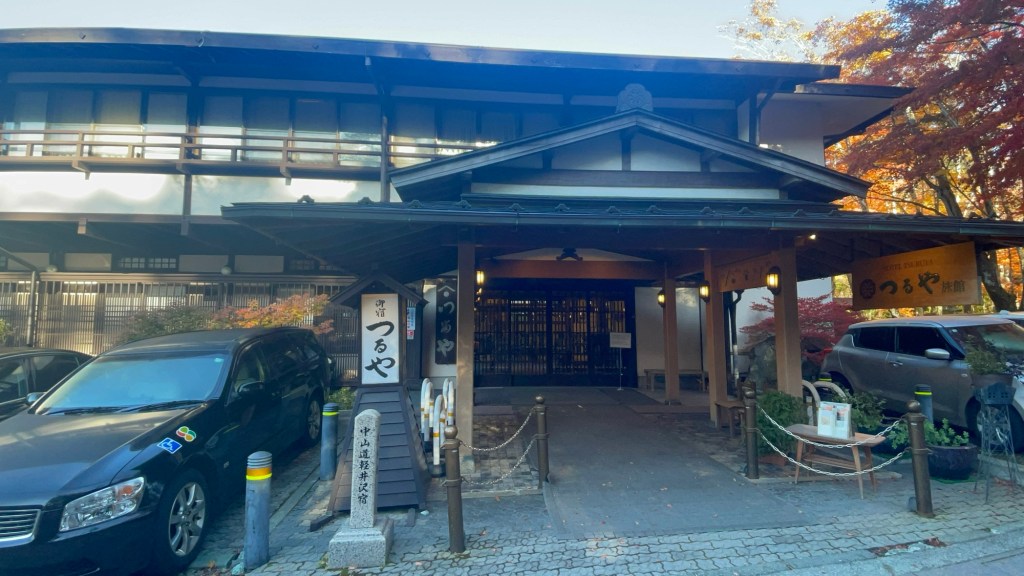
Evening: We checked into Hotel Tsuruya 旧軽井沢ホテル, a wonderful traditional ryokan that perfectly captured Karuizawa’s unique character—Japanese hospitality with that subtle Western influence that defines this resort town. Our room featured both Western beds and traditional futon options.

What made our stay at Tsuruya truly invaluable was meeting the ryokan owner. When we mentioned our planned hike to Usui Toge the next day, he showed us a YouTube video he had personally filmed of the exact trail we would be taking! This was incredibly fortunate—the route from Karuizawa to Usui Toge Pass and down to Yokokawa is one of the most remote sections of the Nakasendo. Unlike our previous trail days, this route had no maps available! His video would become our primary navigation tool for the following day’s adventure.

旧軽井沢ホテル (Hotel Tsuruya)
〒389-0102 長野県北佐久郡軽井沢町旧軽井沢678
678 Kyu-Karuizawa, Karuizawa, Kitasaku District, Nagano 389-0102, Japan
http://www.tsuruyaryokan.jp/
Traditional ryokan with Western influences

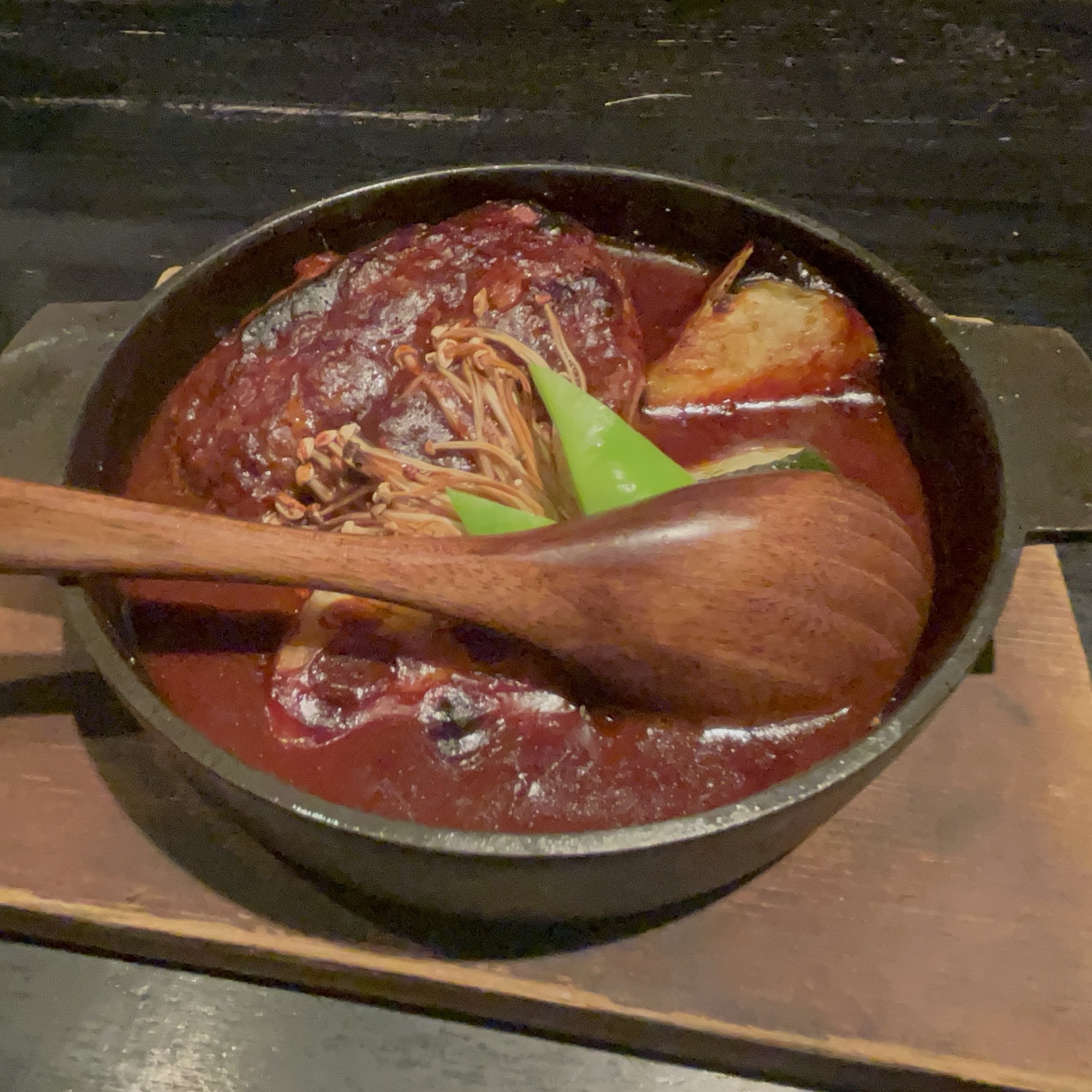
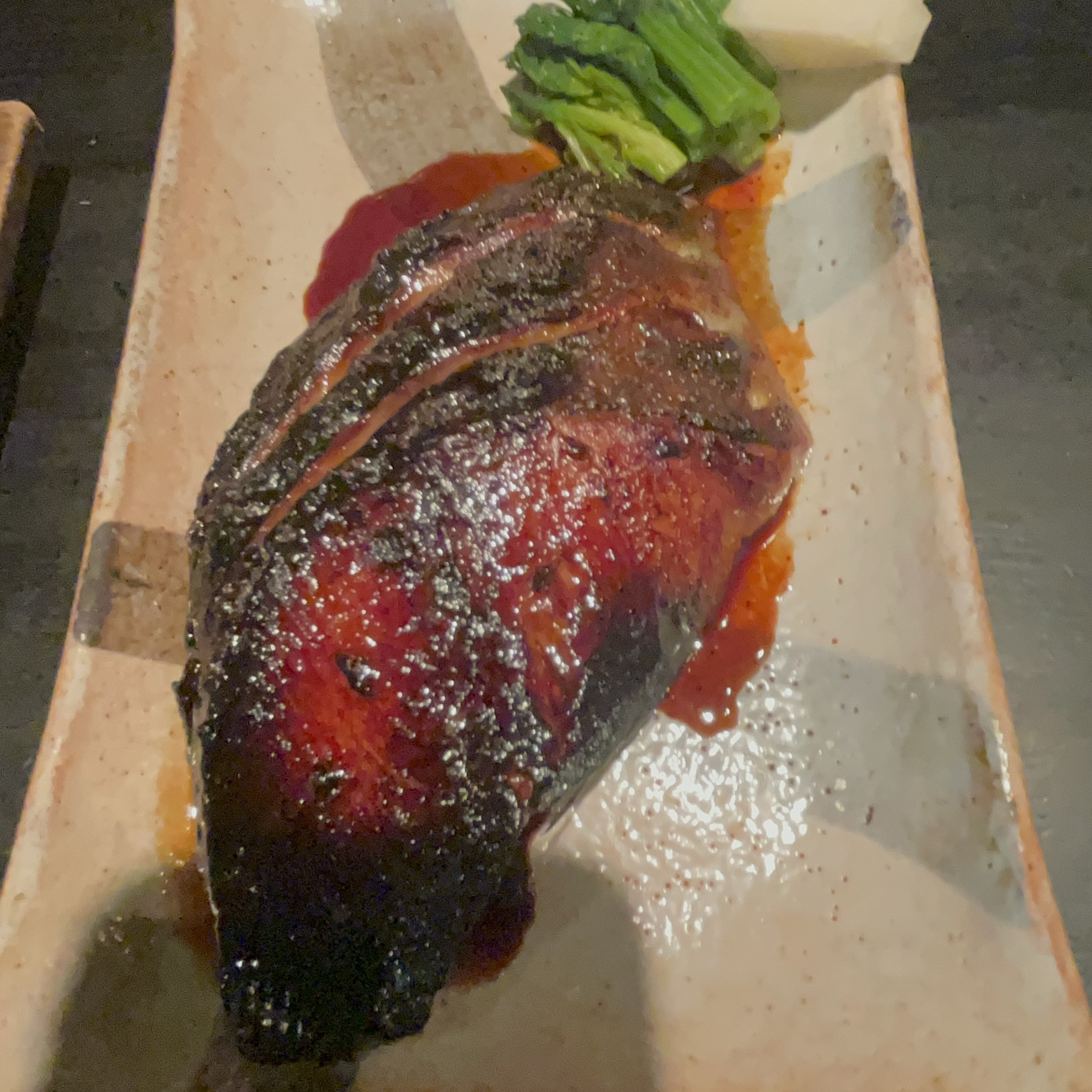
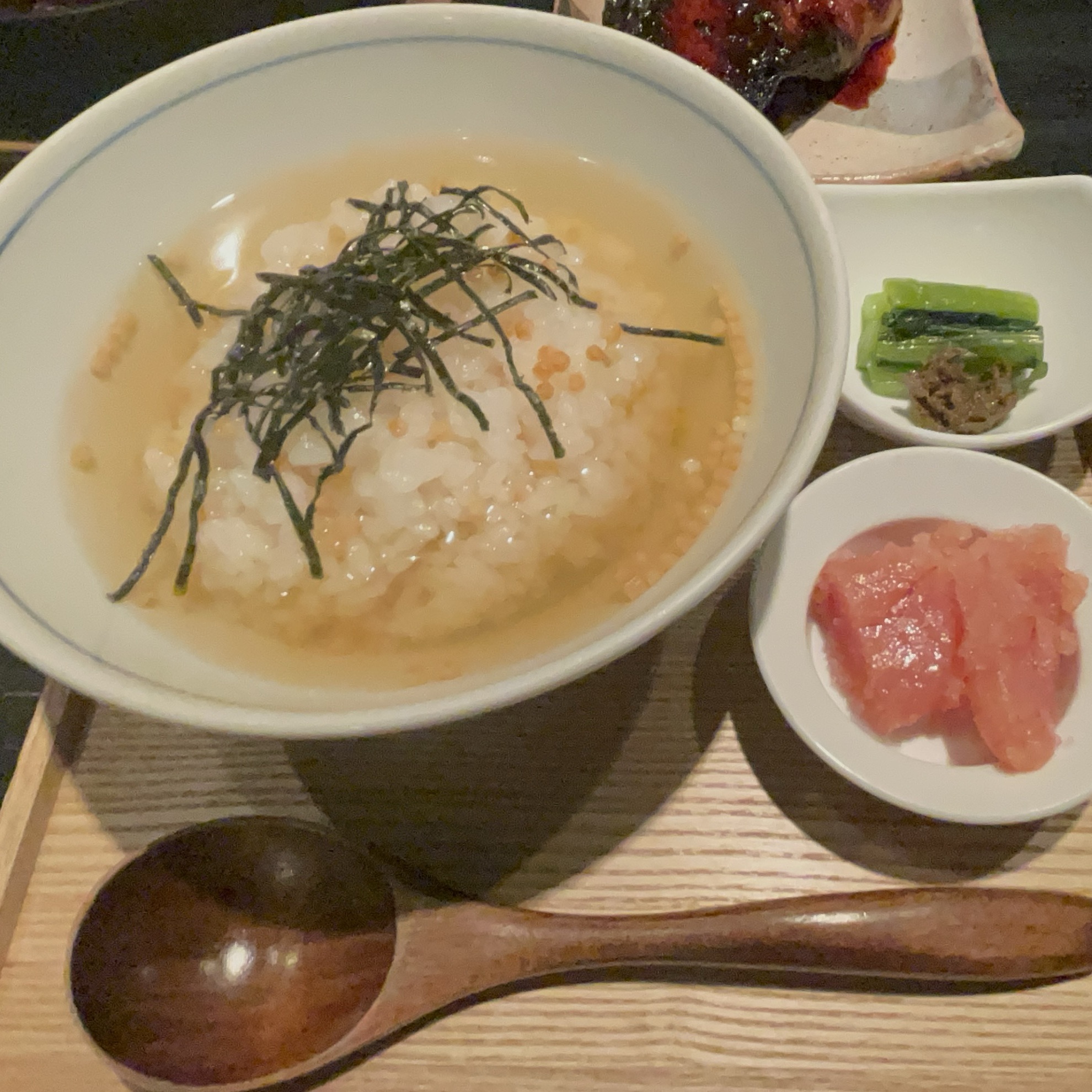
For dinner, we walked to Sujyu Masayuki, a fusion restaurant that blended Japanese and Western culinary influences—perfectly fitting for Karuizawa’s hybrid cultural identity. The meal was creative and delicious, providing comfort food we craved after days of hiking.

Sujyu Masayuki
Karuizawa, Nagano
営業時間: 要確認 Operating Hours: Please check
Fusion cuisine

Day 4 covered approximately 17,085 steps of urban exploration rather than mountain trails—a welcome change of pace that allowed our hiking-weary bodies to recover while still experiencing the rich cultural heritage of Matsumoto and the unique atmosphere of Karuizawa. The spontaneous encounters (like the ceramic craftsman), the stunning Matsumoto Castle, the refreshing discovery of Matsumoto’s spring water wells, the successful shopping, and especially the fortuitous meeting with the Tsuruya owner all reinforced that some of travel’s best moments come from flexibility and openness to unexpected experiences.

Tomorrow would bring our most remote and challenging hike yet—the legendary Usui Toge Pass. During the Edo period, this pass was so notoriously difficult that it was said “Kiso no Kakehashi, Ota no Watashi, and Usui Pass are the only ones to be crossed.” The climb from Karuizawa would be relatively gentle (only 200 meters elevation gain), but the descent on the Yokokawa side would be a steep 800-meter drop. Armed with the ryokan owner’s homemade trail videos, packed provisions, and four days of accumulated hiking experience, we were as ready as we could be for this final mountain crossing. After completing this section, we planned to continue our journey to the famous hot spring town of Kusatsu Onsen for a well-deserved soak.

Note: This trip was made in November 2024.
Trail 3: Walking the Nakasendo Trail – From Yabuhara to Narai-juku via Torii Toge Pass

Day 3 Summary:
7:00 AM: Breakfast at Kiso Mikawaya
8:55 AM: Depart Kiso-Fukushima Station 木曽福島 via Chuo Line
9:11 AM: Arrive at Yabuhara Station 藪原
9:11 AM – 12:15 PM: Hike from Yabuhara to Narai-juku 奈良井宿 via Torii Toge Pass 鳥居峠 (3hr, 9.3km)
1:00 PM: Explore Narai-juku and late lunch at Kiso Tanakaya 木曽田中屋
2:00 PM: 40 min walk to Kiso Hirasawa 木曽平沢
3:36 PM: Train from Kiso Hirasawa 木曽平沢 to Matsumoto 松本
4:48 PM: Arrive at Matsumoto
Evening: Dinner at Tsukumo 九十九 Matsumoto

Day 3 of our Nakasendo adventure brought us to what would be the steepest climb yet—the legendary Torii Toge Pass connecting Yabuhara to Narai-juku. After two days of hiking, our legs were feeling the accumulated miles, but the promise of one of Japan’s best-preserved post towns kept our spirits high.

7:00 AM: We started the day with a hearty breakfast at our lodging, Kiso Mikawaya, fueling up for what we knew would be a challenging ascent. The mountain air was crisp and dry—perfect hiking weather.

8:55 AM: From Kiso-Fukushima Station 木曽福島, we boarded the local Chuo Line bound for Yabuhara 藪原. The short 15-minute train ride through the Kiso Valley offered a preview of the mountainous terrain we’d soon be climbing.

The Yabuhara to Narai section via Torii Toge Pass is said to be one of the most historically significant stretches of the entire Nakasendo 中山道 Trail. During the Edo period, this route was notorious for being the most treacherous and difficult section of the 500+ kilometer journey between Kyoto and Edo. Torii Pass, at over 1,000 meters elevation, stands as the highest point along the entire Nakasendo. The pass earned its name from a torii gate constructed under the order of Kiso Yoshimoto 木曾義元 (1475-1504), who prayed there before battle and subsequently built the gate in gratitude for his victory. Because of the challenging terrain of this mountain crossing, the post town of Narai on the other side flourished as weary travelers desperately needed rest and accommodation after conquering the steep ascent and descent. This geographical challenge is said to transform Narai into one of the wealthiest post towns on the Nakasendo, earning it the legendary nickname “Narai of a Thousand Houses” 奈良井の千軒 due to its abundance of inns and guesthouses. Beyond Narai lies Kiso Hirasawa, not a post town for travelers but rather an artisan village that became the heart of Japanese lacquerware production for over 400 years, supplying exquisite crafts that were distributed throughout Japan via the Nakasendo.

9:11 AM: We arrived at Yabuhara Station 藪原, a small mountain village that marks the start of one of the Nakasendo’s most historic—and most demanding—sections. Without much time to explore, we walked through the quiet town streets, following the trail markers that would lead us up and over Torii Toge Pass 鳥居峠.

The ascent began almost immediately. Unlike the gentler trails of the previous days, this route wasted no time gaining elevation. The path wound steeply upward through dense forest, and we quickly understood why this section has a reputation among Nakasendo hikers. The climb was relentless but manageable, with the trail well-maintained and clearly marked.

What made this climb truly memorable wasn’t just the physical challenge—it was an unexpected encounter. Along the trail, we met a remarkable group of Japanese seniors, ranging in age from their 60s to 80s, who were tackling this very route. Through brief conversations and shared smiles, we learned they were experienced hikers who had walked not only the Nakasendo multiple times but also international trails like the Camino de Santiago. Their energy, determination, and obvious joy in the mountains were incredibly inspiring. If they could conquer these steep mountain passes with such enthusiasm, we certainly had no excuse to complain about sore legs!

As we climbed higher, the forest transformed around us. Autumn had painted the mountainside in brilliant shades of gold, orange, and red. The rustling of leaves in the breeze created a tranquil soundtrack to our ascent, and we found ourselves stopping frequently. Not just to catch our breath, but to capture the stunning fall colours on camera. The play of sunlight through the canopy created magical lighting conditions that made every turn of the trail photo-worthy.

10:50 AM: Torii Toge Pass 鳥居峠 itself is a serene mountain crossing at approximately 1,197 meters elevation. The pass earned its name from the torii gate that once stood here, marking the boundary between domains during the Edo period. Though the climb was steep, it never felt dangerous or exposed—just a steady, determined push upward through beautiful forest. The sense of accomplishment upon reaching the pass was palpable.

We may have inadvertently taken a shortcut with our newfound senior hiking companions, but the route we followed was clearly well-worn by locals who knew the trail intimately. Sometimes the most authentic experiences come from following those who walk these paths regularly rather than strictly adhering to every mapped landmark.

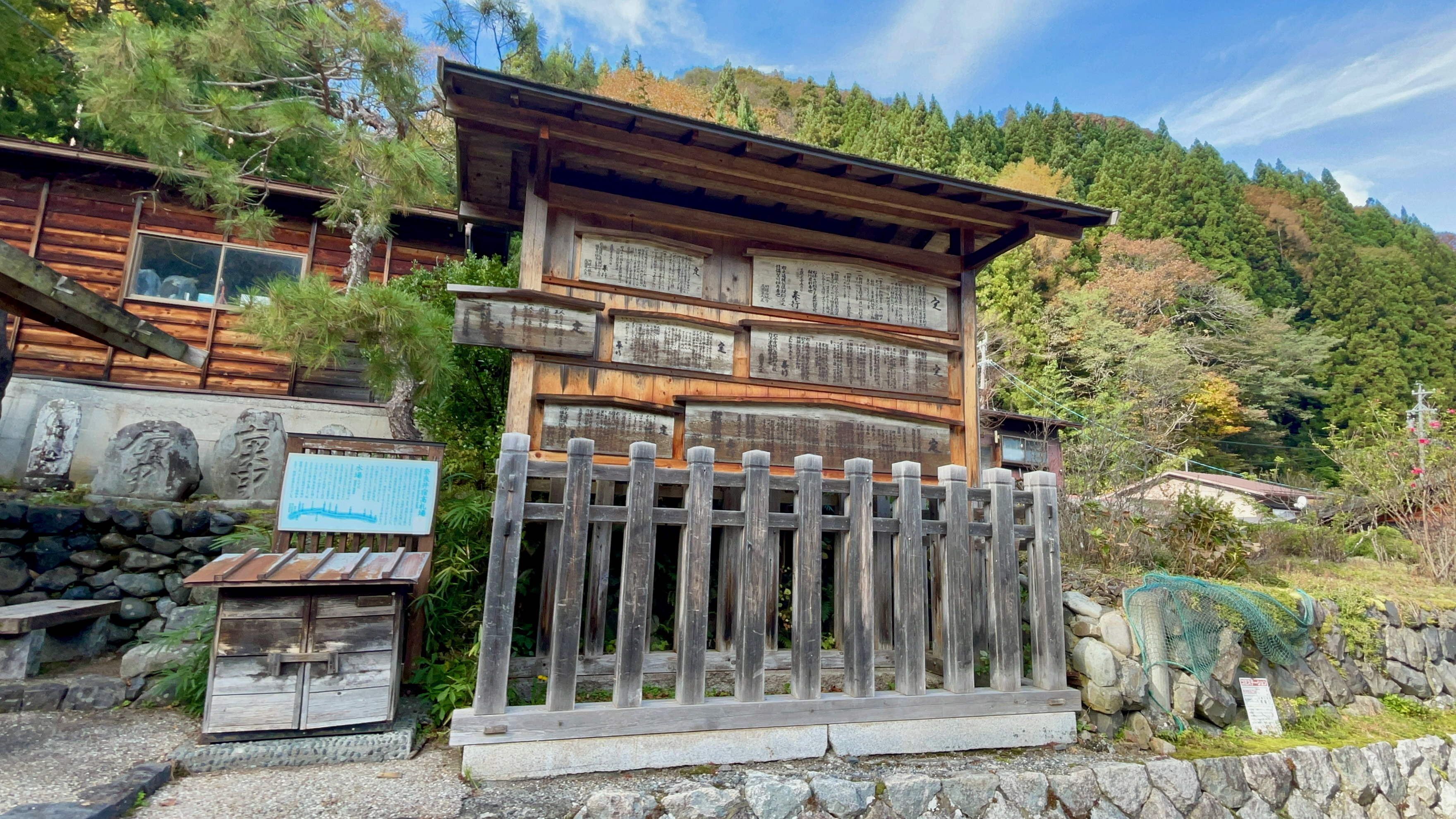
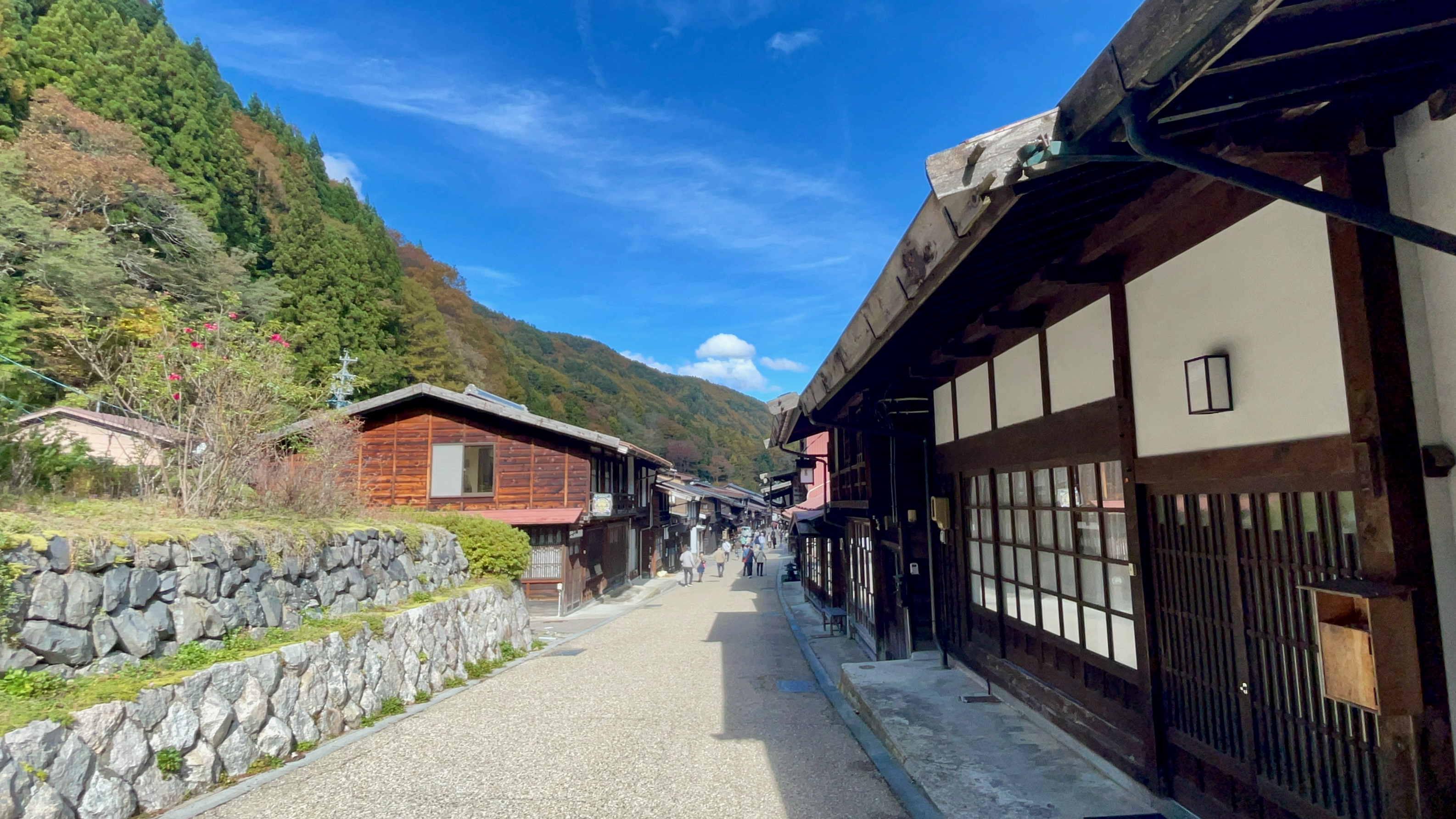
12:15 PM: The descent from Torii Toge 鳥居峠 brought us to Narai-juku 奈良井宿, and we immediately understood why this post town is often called the jewel of the Nakasendo. Stretching nearly one kilometer along the old highway, Narai 奈良井 is remarkably well-preserved, with traditional wooden buildings lining both sides of the street. Unlike the quieter Tsumago or the steep Magome, Narai felt alive with activity—a testament to its accessibility by train, which has kept it thriving as both a historical site and a living community.

The main street was bustling with visitors, and the aroma of grilled foods and fresh soba wafted from numerous restaurants and food stalls. Many establishments had queues stretching out their doors, particularly the popular soba shops. After our strenuous morning hike, we were grateful to secure a table at Kiso Tanakaya 木曽田中屋, a cozy soba restaurant that perfectly embodied the traditional atmosphere of the post town.

木曽田中屋 (Kiso Tanakaya)
〒399-6303 長野県塩尻市奈良井403
403 Narai, Shiojiri, Nagano 399-6303, Japan
Operating Hours: Please check
Traditional soba and local Kiso Valley specialties

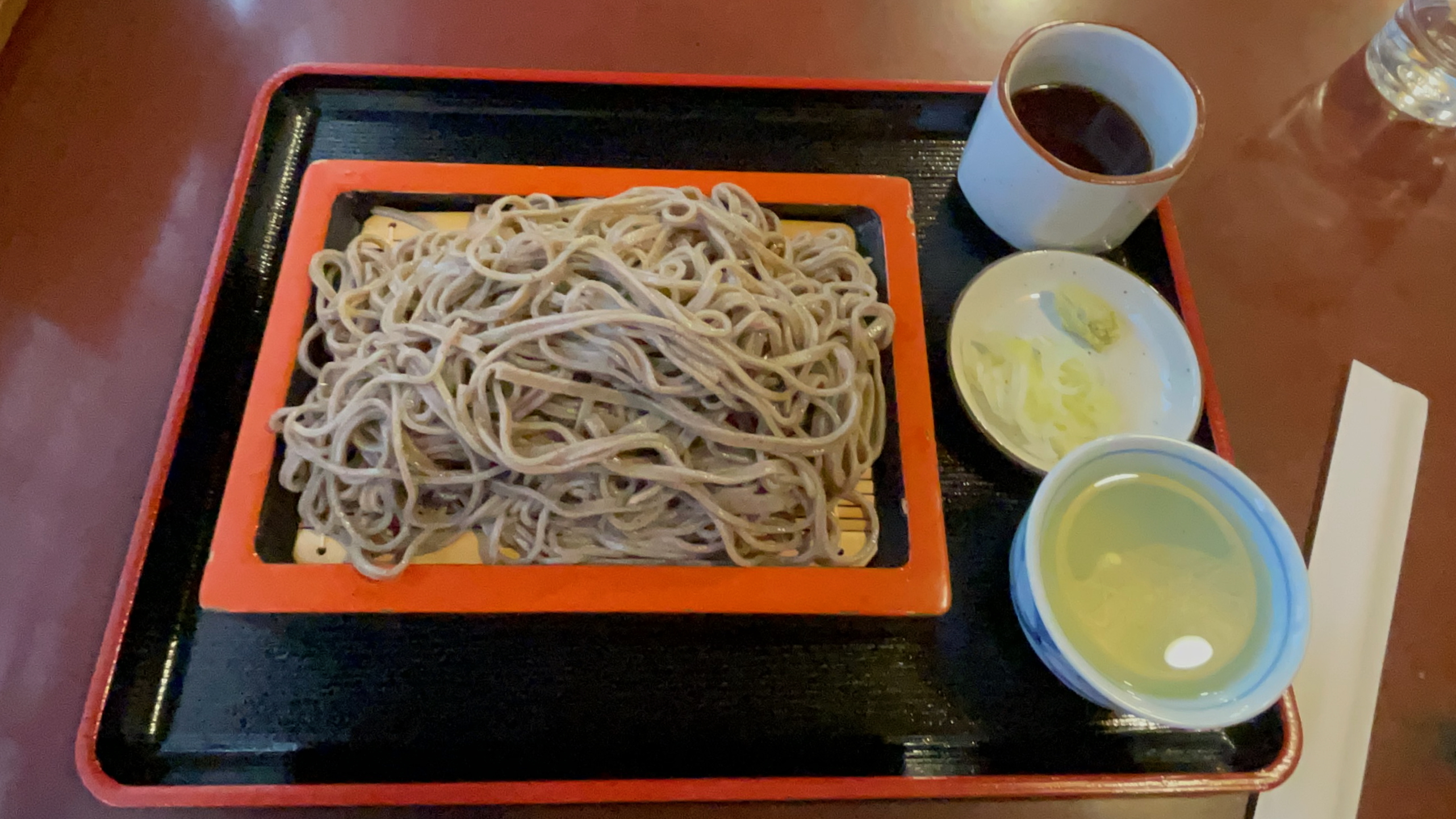
The handmade soba was exceptional with just the right texture, served cold with a savoury dipping sauce. After hours of hiking, this simple meal felt like a feast. We took our time, savouring both the food and the warm, rustic ambiance of the restaurant.

After lunch, we wandered through Narai 奈良井’s historic streets, admiring the preserved architecture and browsing the craft shops. The town specialised in lacquerware and woodwork, products for which the Kiso Valley has been famous for centuries. We passed traditional lacquerware boutiques, and tea houses, snacks and ice cream!

2:00 PM: Before catching our train, we made a quick detour to shop in Kiso Hirasawa 木曽平沢, a town renowned for its traditional lacquerware production. I couldn’t resist purchasing a beautifully crafted lacquerware cup as a memento of our journey—a practical souvenir that would remind us daily of the Nakasendo trail.

4:01 PM: From Kiso Hirasawa Station 木曽平沢, we boarded the Chuo Line to Matsumoto 松本. While Magome charmed with its steep, storybook streets and Tsumago impressed with its quiet authenticity, Narai balanced preservation with vitality. It’s a place worth revisiting—perhaps next time arriving by train rather than on foot, to explore it with fresh legs!

4:48 PM: We arrived at Matsumoto Station 松本 and walked the short six minutes to our accommodation for the night.

Tabino Hotel lit Matsumoto タビノホテルリット松本
〒390-0815 長野県松本市深志1丁目4-5
1 Chome-4-5 Fukashi, Matsumoto, Nagano 390-0815, Japan
https://matsumoto.tabino-hotel.jp/

The hotel lived up to its name—it was indeed pretty lit!

Evening: For dinner, we had a tough time looking for places to go as everywhere was full! We managed to get a table at Tsukumo 九十九, a local izakaya-style restaurant in Matsumoto. There were very friendly staff and great food. Over plates of regional dishes and cold beer, we recounted the day’s adventures—the inspiring senior hikers, the steep but beautiful Torii Toge, and the vibrant streets of Narai. The beer tasted particularly good after climbing over 28,000 steps and 9.3 kilometers, including what was definitely the steepest ascent we’d faced on the Nakasendo so far.

九十九 (Tsukumo)
松本市内
Matsumoto, Nagano
営業時間: 要確認(夕食は8:30PMまでオーダー可能)
Local Matsumoto cuisine and drinks

Exhausted but satisfied, we returned to our hotel for a well-deserved rest. Tomorrow would bring new sections of the trail, but tonight was for recovery.

Day 3 covered approximately 9.3 kilometers and 28,613 steps, with elevation gain over Torii Toge Pass. By this point in our journey, we were definitely building stamina, though our bodies were undeniably sore from the accumulated miles. The steepness of today’s trail was more challenging than Days 1 or 2, but the manageable duration (just 3 hours of hiking) made it feel achievable. The autumn colours, inspiring encounters with experienced hikers, and the reward of reaching Narai-juku made every upward step worthwhile. Note: Trip was made in November 2024.

For future hikers: Narai-juku is absolutely worth visiting, whether you arrive on foot via the Nakasendo or by train. The town offers the perfect blend of historical atmosphere and modern accessibility. The soba restaurants are excellent but popular—expect queues during peak times! Matsumoto also have great autumn colours and day hikes to explore!
Trail 2: Walking the Nakasendo Trail – From Tsumago-juku to Nojiri-juku via Nagiso

Day 2 Summary:
8:00 AM:
Shuttle from Tokonamiso to Tsumago-juku, then hike to Nagiso Station 南木曽駅 (1hr, 3.9km)
9:30 AM: Breakfast at Nagiso Pierrot
11:00 AM: Nagiso to Nojiri-juku 中山道野尻宿 (5.5hr, 15.6km)
5:27 PM: Train from Nojiri 野尻 to Kiso-Fukushima Station 木曽福島駅
6:15 PM: Bus to hotel
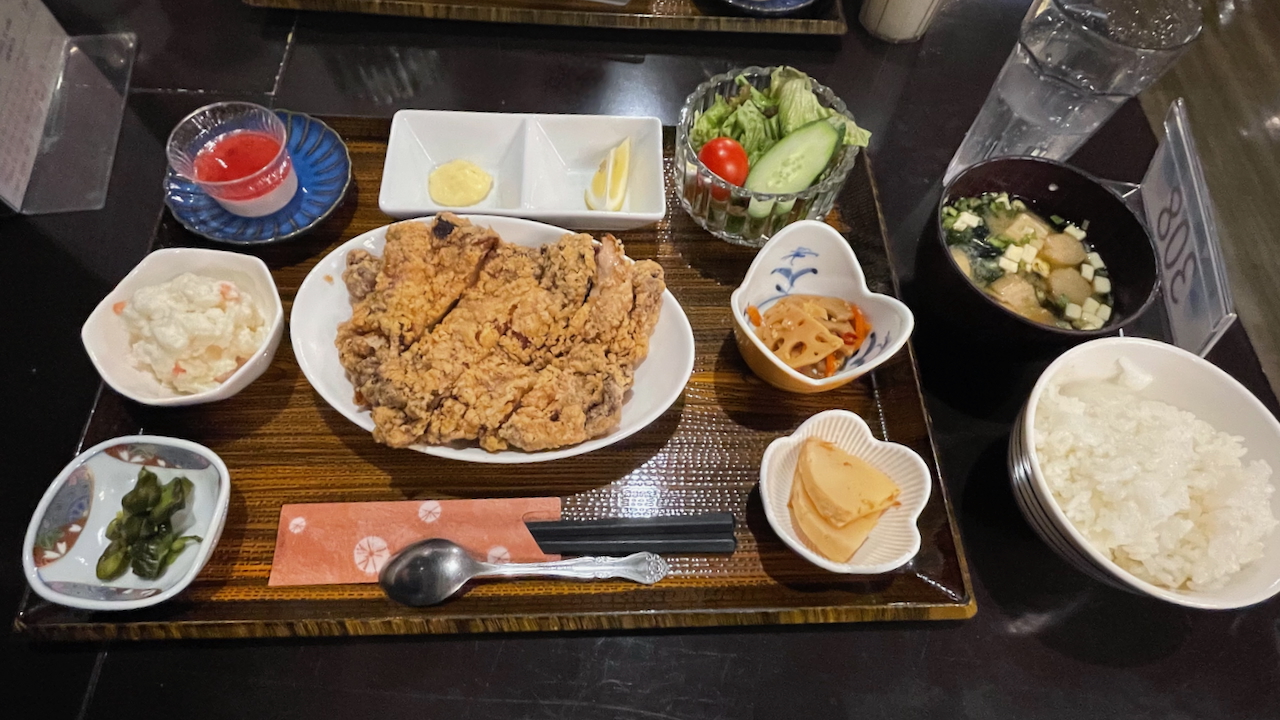
Evening: Dinner at Kiso Mikawaya 自由旅クラブ木曽三河家

Day 2 of our Nakasendo adventure was our longest hiking day yet—nearly 20 kilometers of this historic trail. After yesterday’s gentle introduction from Magome to Tsumago, today would test our endurance as we tackled the challenging route to Nojiri-juku.

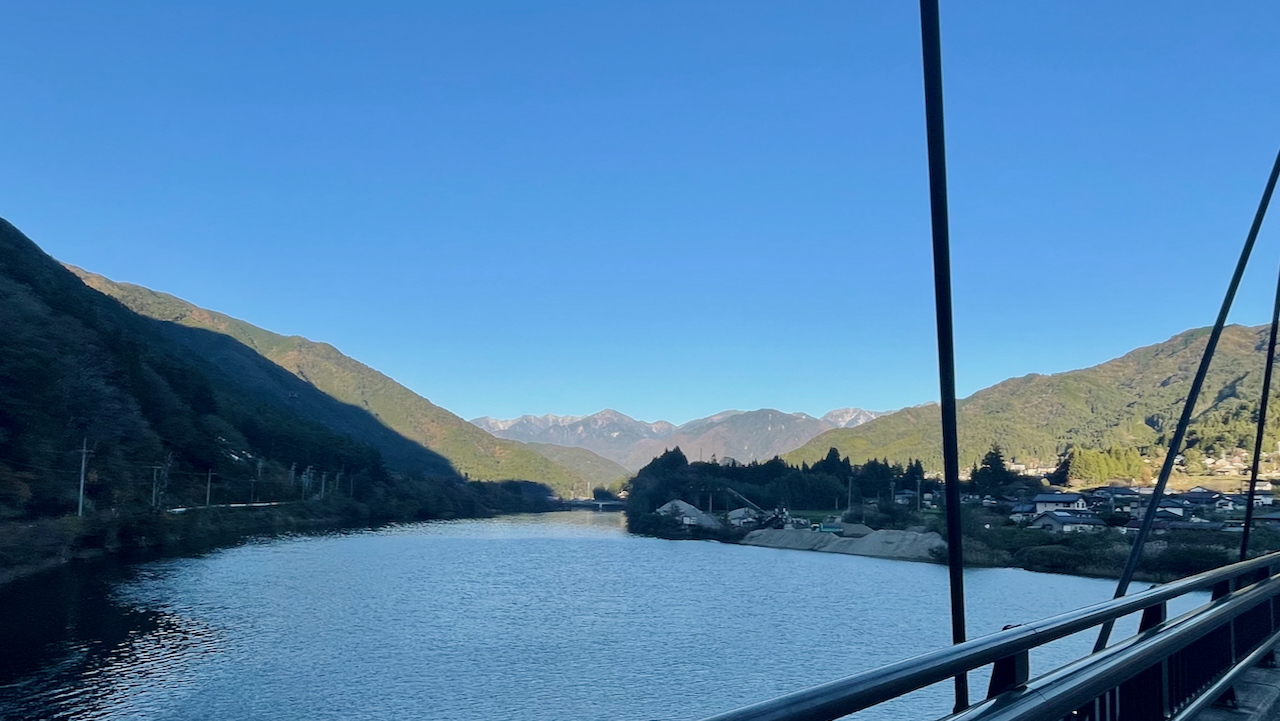
8:00 AM: We started early with the complimentary shuttle from our ryokan Tokonamiso back to Tsumago-juku. The morning air was crisp, and mist still clung to the mountains as we prepared for what would be our most demanding day on the trail. From Tsumago, we began the steady descent toward Nagiso Station—a relatively easy 3.9-kilometer warm-up that took us through peaceful countryside and traditional villages.

The path from Tsumago winds through small hamlets, offering glimpses of rural Japanese life that has remained largely unchanged for centuries. The distant sound of the Kiso River accompanied our footsteps.

09:30 AM: After reaching Nagiso Station, we took time to properly prepare for the long day ahead. We made essential stops for supplies. We visited 蔦屋製菓舗 (Tsutaya Seikaho) for snacks, picking up traditional Japanese sweets and energy-boosting treats that would sustain us throughout the day. At サンショップ・イシカワ (San Shop Ishikawa), we stocked up on water and lunch packs—crucial provisions for what we anticipated would be a long mountain hike with limited food options.

We had a lovely breakfast at Pierrot, a charming rustic café in Nagiso that provided the perfect fuel for our hiking day. The cozy atmosphere and hearty breakfast gave us a slow-paced, relaxed start before tackling what we expected to be our most demanding trail section. After Pierrot, we crossed the Momosuke Bridge 桃介橋 that marked the start of the next part of our trail.

蔦屋製菓舗 (Tsutaya Seikaho)
〒399-5301 長野県木曽郡南木曽町読書東栄町3436-26
3436-26 Reading Toei-Cho, Nagiso-machi, Kiso-gun, Nagano 399-5301, Japan
電話: 0264-57-2069 TEL: 0264-57-2069
営業時間: 要確認 定休日: 要確認 Operating Hours: Please check
Traditional sweets and hiking snacks

サンショップ・イシカワ (San Shop Ishikawa)
〒399-5301 長野県木曽郡南木曽町読書
Yomikaki, Nagiso-machi, Kiso-gun, Nagano 399-5301, Japan
営業時間: 要確認 定休日: 要確認 Operating Hours: Please check
Water and lunch pack supplies

Pierrot (Breakfast Café)
〒399-5301 長野県木曽郡南木曽町読書東栄町3592-8
3592-8 Yomikaki Higashi Sakae-Machi, Nagiso-machi, Kiso-gun, Nagano 399-5301, Japan
電話: 0264-57-2093 TEL: 0264-57-2093
営業時間: 要確認 定休日: 要確認 Operating Hours: Please check

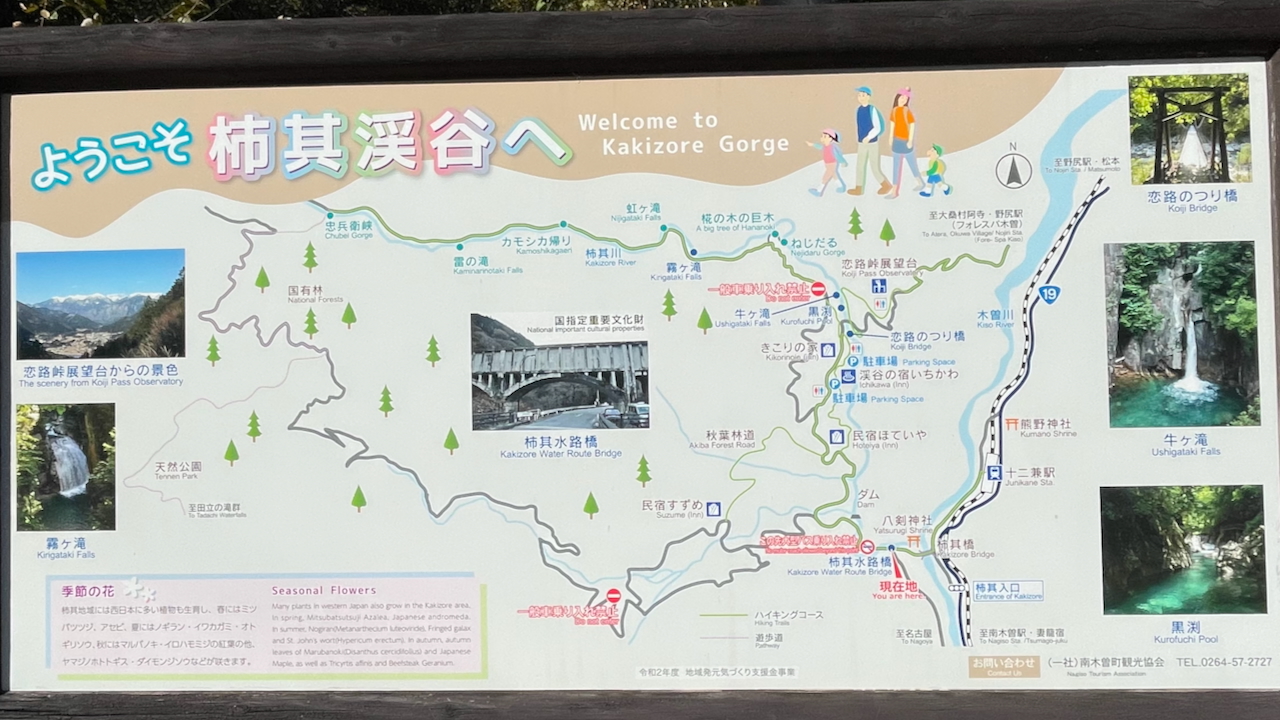
11:00 AM: From Nagiso, the traditional trail to Nojiri-juku should stretch 15.6 kilometers through some of the most isolated sections of the Nakasendo. As we learned that the original hiking route was blocked due to trail conditions from the day before, we had to take the alternative natural route instead of the planned mountain trail. This detour led us along a combination of forest paths and local roads, creating a very different experience from what we had anticipated.

While not the authentic Nakasendo trail we had hoped for, this alternative route offered its own unique insights. A significant portion of our route took us through residential areas and along local roads near people’s houses. Walking through these quiet rural neighborhoods gave us glimpses of everyday Japanese life that tourists rarely see. There were also warning signs about dogs protecting the area from wild animals.

1:00 PM We had a quick break for lunch. Bathing in the sunlight through the trees, and sounds of the river beside us. The highlight of our unexpected detour was discovering a beautiful waterfall Ushigataki Falls 牛が滝 hidden in the forest of Kakizore Gorge 柿其渓谷 —a scenic reward we wouldn’t have encountered on the original trail. The climb to the top of the stairs was quite scary for me! I was glad my friends enjoyed the climb and scenery. These spontaneous discoveries often become the most memorable parts of any journey.

4:30 PM After navigating the alternative route and road sections, we finally arrived at Nojiri-juku, more tired than expected from the unexpected terrain changes. The physical demands of the day came not from mountain climbs but from the extended distance on paved roads, which tested our feet and legs in different ways. Road walking requires different stamina than trail hiking, and we quickly learned to appreciate the cushioning that forest paths provide. Nojiri is quieter, less polished, and genuinely lived-in. With barely any tourists, Nojiri retains the sleepy atmosphere of a forgotten mountain village. We hurried as it was important to catch the right train otherwise we will waste a lot of time.

5:27 PM: From Nojiri, we caught the local train to Kiso-Fukushima Station—a welcome relief after walking nearly 20 kilometers. The short train ride through the Kiso Valley provided beautiful sunset views and gave our aching legs a much-needed rest.

6:15 PM: At Kiso-Fukushima Station, we hopped on the Kaida Kogen bus line (¥200) for the short ride to our accommodation. Even this simple bus journey felt like a luxury after the day’s exertion!

Evening: We settled into Kiso Mikawaya 自由旅クラブ木曽三河家, a traditional mountain lodge that perfectly captured the spirit of our Nakasendo journey. The dinner featured regional specialties that provided the perfect end to our most challenging day.

自由旅クラブ木曽三河家 ホテル (Kiso Mikawaya)
〒397-0001 長野県木曽郡木曽町福島5782
5782 Fukushima, Kiso-machi, Kiso-gun, Nagano 397-0001, Japan
電話: 0264-24-3332 TEL: 0264-24-3332
チェックイン: 15:00 チェックアウト: 10:00 Check-in: 3:00 PM Check-out: 10:00 AM
http://kiso-mikawaya.com/

Day 2 covered approximately 20 kilometers, but not the route we had originally planned. While the blocked traditional trail was disappointing, the alternative natural route offered its own rewards—discovering hidden waterfalls, walking through authentic rural neighborhoods, and experiencing the flexibility required for adventure travel. This unexpected detour reminded us that historical routes aren’t always accessible, and sometimes the unplanned paths provide equally valuable experiences.

For hikers considering this route, always check current trail conditions at the tourist information centers, as weather and maintenance can affect accessibility. Having backup route options and flexible expectations are essential for Nakasendo hiking.